Support your painful arm and keep your neck comfortable
Give your painful arm support instead of leaving it hanging forward when you lie down. Arthritis UK suggests trying lying on your good side with a pillow under your neck, a folded pillow supporting the painful arm in front of your body, and another pillow behind your back to stop you rolling onto the painful side.2 This is the rare occasion when I approve of a pillow pile. If you prefer lying on your back, it suggests trying one or two pillows under the painful arm for support.
If you've had shoulder surgery, your surgical team's sling and sleeping-position advice comes first.
Match your pillow height to how you sleep: enough height to fill the gap beneath your head on your side, and a lower pillow on your back so your head isn't pushed forward. A good pillow made a real difference to my comfort with Dunlopillo, and checking the height is where I start. When you're supporting a sore shoulder, compare pillows for side sleepers by how comfortably your head rests with your neck in line, as well as how soft they feel in your hand.
The position research is mixed. In Werner's 2010 study, pressure inside the shoulder was measured in 20 healthy volunteers placed in the four most common sleep positions, and it was lower lying on the back than lying on the side or front. In Holdaway's 2018 study of 761 workers, the positions expected to be worst were not linked with more shoulder pain, perhaps because people with sore shoulders already avoided those positions.3 Pillows and mattress firmness were not recorded.4 Neither study tested a mattress or a pillow. My view is to judge a mattress by your comfort in the position you'll use in bed.
Front sleeping is the one habit I encourage you to change. If you can't change it, choose a firmer feel and a thin pillow so your neck isn't held at such a steep angle.
A softer comfort layer lets the lower shoulder sink in
For a sore-shouldered side sleeper, I'd start with a soft-medium or medium feel over pocket springs. Part of your weight goes through whichever shoulder is underneath you: the good shoulder in Arthritis UK's suggested position, the sore shoulder if you roll over, or a painful shoulder on either side if both hurt. A comfort layer with little give pushes back at that point. That's the paving slab feeling, where your shoulder stays on top instead of sinking in a little.
Body weight comes before sleeping position when I choose the feel: lighter people need more give, heavier people need a stronger support core, and side sleepers go a notch softer than people lying on their backs. These are my rule-of-thumb starting feels for side sleeping.
| Your weight | Where to start | What to check at your shoulder and hips |
|---|
| Under about 9 stone | A softer feel, including softer than a maker's chart suggests | Your lower shoulder sinks into the comfort layer without needing much weight to compress it. |
| About 9 to 18 stone | Soft-medium or medium | Your shoulder sinks a little while your waist and hips stay level. |
| Over about 18 stone | A firmer support core with a comfort layer that gives | Your hips stay supported without holding your shoulder against an unyielding comfort layer. |
Firmness words vary between makers, so check the construction and the feel when comparing beds. Medium-firm is where I start for most people generally, but a shoulder underneath you needs more give. The idea that firmer automatically means better support is a myth. "Orthopaedic" means nothing useful on a label, usually means firm and is often harder than a sore-shouldered side sleeper wants, which is quite a performance for one word.
Memory foam and latex are both sensible comfort layer choices over pocket springs, but they feel different when you settle and turn. Memory foam sinks slowly and absorbs movement from a partner turning over. It also runs warm, so avoid a deep memory foam comfort layer if you already overheat in bed. Latex feels springier and is easier to turn on. I favour latex when you change sides frequently and dislike sinking deeply into foam.
Zoned pocket springs are sensible when the zones line up with your shoulders and hips. Your height affects where you lie across those zones, so check where your shoulder lands instead of choosing by the number of zones. When comparing mattresses for side sleepers, look for that combination of give beneath the shoulder and support beneath the hips.
Going too soft creates the hammock feeling: your hips drop below the rest of you. More sink isn't automatically more comfortable. A topper softens a sound, level mattress, so try one if the problem is a comfort layer with too little give. A topper follows an existing dip, though, and leaves the underlying sag in place. Check the mattress without bedding on it before deciding which problem you're dealing with.
Give yourself ten minutes lying as you normally do in bed when you try a mattress in a shop, with particular attention to the shoulder underneath you. The showroom bloke can save the grand finale until you've finished lying there. Check whether that shoulder settles into the comfort layer, whether you feel pressure building, and whether turning over feels easy. Treat this as a way to reject an uncomfortable mattress.
A clear refund policy is a bloody welcome bit of paperwork when comfort is this personal. Read the returns terms before paying, including any minimum-use requirement and whether you get a refund or an exchange. Check collection charges too, because returning a mattress involves more than carrying a parcel to the post office.
Know when it isn't the bed
Shoulder pain that's getting worse, or an arm or shoulder that's very difficult to move, needs a GP assessment under NHS guidance on shoulder pain.1 Pins and needles that do not go away, or no feeling in your arm or shoulder, need an urgent GP appointment or NHS 111. These symptoms need attention regardless of what mattress you sleep on.
Pain and stiffness that last for months or years are symptoms the NHS groups with frozen shoulder or arthritis. Arthritis UK says frozen shoulder can bring sudden muscle pains called muscle spasms, especially at night.
Pain that's often worse when you use your arm is grouped by the NHS with tendonitis, bursitis or impingement. Arthritis UK describes the rotator cuff as a group of muscles and tendons that keep the upper arm bone held in the shoulder blade socket, and says pain from a problem with it is often called shoulder impingement. A mattress doesn't treat a rotator cuff condition.
Tingling, numbness or weakness, or a shoulder that clicks or locks, are symptoms the NHS groups with shoulder instability, sometimes because of hypermobility. If hypermobility is relevant to your shoulder comfort, the hypermobility guide covers choosing a mattress around that need.
Sudden very bad pain with difficulty moving the arm, sometimes with a change in shape, is grouped by the NHS with a dislocated shoulder, broken bone or torn tendon. Pain on top of the shoulder, where the collarbone meets it, is grouped with problems in the acromioclavicular joint, such as a dislocation or stretched or torn ligaments.
Neck problems can make the shoulder blade or upper outer arm painful, and tingling in the hand or arm alongside shoulder pain is likely to come from the neck, according to Arthritis UK, which is relevant when considering the comfort advice in the neck-pain mattress guide. Where you feel the pain and where it starts aren't always the same place.
The NHS says to stay active and keep gently moving your shoulder instead of stopping using it completely, and recovery can take 6 months or longer. Its symptoms-and-causes information comes with a clear instruction: do not self-diagnose, and see a GP if you're worried.
Avoid these choices when your shoulder hurts in bed
- Sleeping on the painful shoulder night after night: Arthritis UK says lying on an affected shoulder can be painful with osteoarthritis, so roll onto your good side and place a pillow behind you.
- Leaving the sore arm hanging forward: that leaves its weight unsupported, so rest it on a folded pillow in front of your body.
- A firm mattress with a thin comfort layer for side sleeping: there's little depth for your lower shoulder to settle into, so choose a comfort layer with more give.
- Buying by the label alone: a firmness-related name doesn't describe how your shoulder will settle, so check the comfort layer and pocket springs.
- A soft, sagging mattress that lets your hips drop: the dip leaves you lying unevenly, so judge replacement by the sag and how you wake instead of its age alone.
- Buying a bed when your shoulder has changed shape or is badly swollen: these are NHS urgent signs of a potentially serious problem, so seek an urgent GP appointment or NHS 111.
When shoulder pain needs care, not a new mattress
NHS guidance on shoulder pain says to see a GP if shoulder pain is getting worse or does not improve after 2 weeks, or it's very difficult to move your arm or shoulder. In many areas you may be able to get help, such as physiotherapy, from NHS community musculoskeletal (MSK) services without needing a referral from a GP.
The NHS says to ask for an urgent GP appointment or get help from NHS 111 if you have sudden or very bad shoulder pain; you cannot move your arm; your arm or shoulder has changed shape or is badly swollen; you have pins and needles that do not go away; there's no feeling in your arm or shoulder; your arm or shoulder is hot or cold to touch; the pain started after an injury or accident, like a fall; you develop severe pain in both shoulders; or you feel feverish or unwell. These can be signs of something serious, like a broken or dislocated bone, or a torn (ruptured) ligament or tendon. You can call 111 or get help from 111 online.
Three mattresses from the list compared by their comfort layers
The mattresses below are WantMattress's own picks, chosen from published specifications and retailer information.
These three examples show the differences to compare, without putting them in rank order. All have memory foam in the comfort layer, and I consider that a warm choice whatever the cooling claim says. Check the exact model and the retailer's returns terms before buying, because a similar name isn't enough to identify the same mattress.
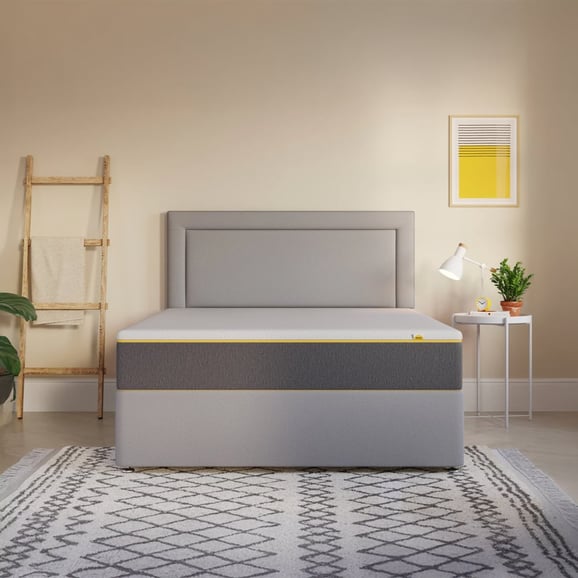
Pocket springs beneath a memory foam comfort layer make this a straightforward construction to consider for side sleeping. Bensons for Beds lists added perimeter edge support and a soft-touch stretch-knit cover, and calls the feel medium. For someone who likes to settle slowly into foam, this is the combination to investigate: give beneath the lower shoulder, with springs supporting the body beneath it. The edge support is also something to check if you share the bed and use its full width.
Check that the feel suits your body weight before choosing it for side sleeping. A lighter person needs enough give without having to press hard into the comfort layer, while a heavier person needs support beneath the hips. Bensons lists rolled delivery, so give it its full expansion time before judging the feel. Rotate this no-turn mattress occasionally instead of flipping it. If you prefer a springier comfort layer or regularly feel too warm in bed, look beyond this memory foam construction.
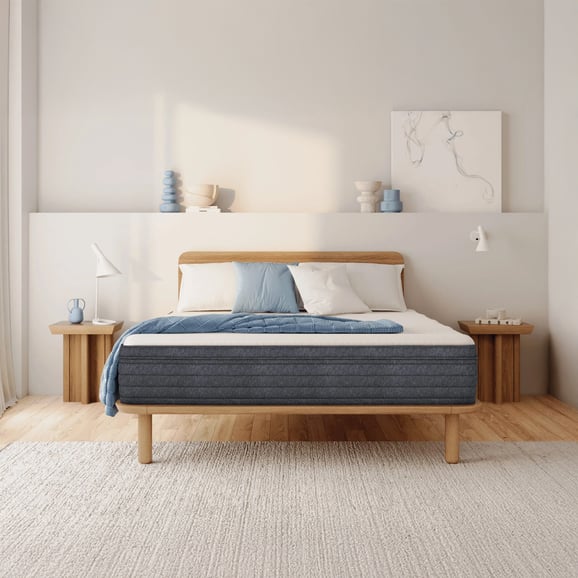
Side sleepers comparing different tensions have a choice here: Bensons for Beds lists Medium and Firm options. Choose Medium deliberately when looking for more give beneath your shoulder, subject to the support you need for your weight. The construction includes a zoned Sensaform memory foam comfort layer with air channels, one layer of nested pocket springs and reinforced edge support. Bensons also lists a quilted surface with fillings made from recycled PET. The zones make shoulder and hip placement part of the comparison.
Pay attention to the selected option when ordering, because the listing opens on the firmer version. Check where your shoulder rests across the zones when you lie down, and whether the comfort layer gives enough there without your hips sinking too far. This no-turn mattress needs regular rotation using its handles, according to Bensons. Check the cover's care instructions too. Someone who dislikes the slow sink of memory foam should consider a springier comfort layer instead of choosing solely for the tension options.
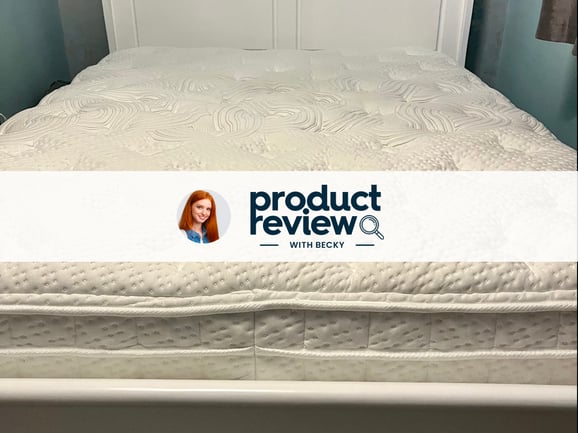
The difference here is memory foam spread through several layers, alongside two layers of encapsulated pocket springs. OTTY lists an embroidered cover with memory foam inside it, then bamboo and charcoal infused memory foam above the upper springs. Below those sit reflex foam, another memory foam layer with drilled holes, shallower pocket springs and a high-density foam base. Side supports surround both spring layers. OTTY calls it medium. This is a construction to consider if you enjoy settling into foam and want to compare how much give sits above the springs.
For this build, concentrate on whether you're comfortable with the amount of foam when settling down and turning over. More layers alone aren't a reason to choose it. If you run warm, look elsewhere instead of relying on the ingredients or drilled holes to change your experience of memory foam. OTTY lists boxed delivery and asks for monthly rotation during the initial twelve months, followed by rotation every three months. Make sure that ongoing handling fits your routine before ordering it.