The hotel feel comes from the whole bed and the night you had
You can copy much of the hotel feel without buying the hotel's mattress. My view is that a newer, firm-ish bed gets a considerable helping hand from crisp bedding, a dark, cool, quiet room and a day spent on your feet. Someone else made the bed, too. Remarkably easy to appreciate a neatly tucked sheet when you weren't the one wrestling with it.
There is a little research behind the new-mattress part. In Enck and colleagues' hotel pilot study, guests rated their sleep better on new mattresses than on the hotel's old stock. The difference was largest among business travellers and guests who often had low back pain or sleep trouble.1 This was one German trade-fair hotel, one night per guest and self-rated sleep. It does not establish a best mattress construction or show that a mattress treats back pain.
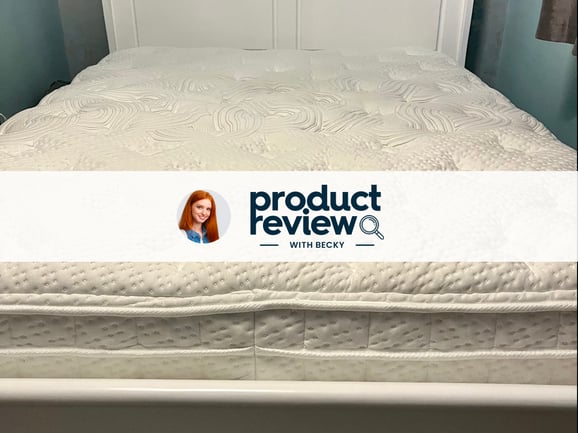
The construction I associate with that hotel feel is medium-firm pocket springs beneath a deep quilted or pillow-top comfort layer, supported by a divan base. A topper adds cushioning, and crisp cotton bedding gives you that smooth, freshly made surface. You feel some give under your shoulders and hips without sinking deeply through the whole mattress.
Pillow-tops are the part I usually resist. The attached soft layer softens further, and you cannot flip the mattress to sleep on the other side. I understand the appeal in a hotel, where the mattress can be taken out of service when that top deteriorates. At home, a separate topper is a more practical choice because you can replace it independently.
So please don't order a mattress purely because you slept well in a Premier Inn. A pleasant hotel night is a fairly expensive souvenir if you buy the wrong bed afterwards. Read the actual construction details and compare them with what you find comfortable at home, including the base and any topper.
A contract label is no substitute for the certificate of conformity
You need the maker's certificate of conformity for the required hazard class before you buy. "Contract" and "hotel quality" are descriptions a retailer can put beside a mattress; neither gives you the document an assessor or insurer needs. Honestly, the paperwork is the least glamorous part of this order and the part I'd be most stubborn about.
BS 7177 is the British Standard for the ignition resistance of mattresses, divans and bed bases. It sets hazard classes for different types of premises. The tests concern resistance to ignition, so avoid treating "Crib 5" as a general promise about what will happen in a fire.
| Hazard class | Typical premises | Ignition sources in plain words |
|---|
| Low hazard | Domestic bedrooms | A smouldering cigarette and a match flame. |
| Medium hazard | Hotels, guest houses, hostels, halls of residence and care homes | A cigarette and match, plus ignition source 5, a wooden crib. |
| High and very high hazard | Premises such as prisons, secure units and offshore accommodation | Larger ignition sources, including source 7, according to the hazard class. |
"Source 5" and "Crib 5" refer to the same wooden-crib ignition source. Source 7 belongs to the larger ignition sources used for higher hazard classes. It isn't a comfort upgrade, despite sounding suspiciously like the next model up in an already overcomplicated mattress range.
The Furniture and Furnishings (Fire) (Safety) Regulations cover domestic upholstered furniture and mattresses. Compliance for domestic use does not meet a hotel's medium-hazard requirement. Ask your assessor to confirm the requirement for your building, then request the matching certificate of conformity from the maker.
The fire hazard class your premises needs is set by your fire risk assessment, and the maker's certificate of conformity for that class is the evidence an assessor or insurer will ask for. Confirm both before you order.
A repeatable, two-sided build works for a changing guest list
For the trade, my default is a medium-firm, two-sided pocket-spring mattress on a matching divan base. You need a comfortable surface for a wide range of guests and a construction housekeeping can maintain. Buying for someone whose weight and sleeping position you don't know is quite different from buying for your own side of the bed.
My usual approach is to consider body weight before sleeping position: a heavier sleeper generally needs more firmness, while a lighter side sleeper needs more give. A hotel guest list contains both. Unless you've developed a particularly awkward check-in questionnaire, medium-firm is the sensible place to begin. On our firmness scale, that is the feel I would look towards for the widest range of guests, with enough cushioning above the springs.
A firmer tension than you might choose for one light sleeper at home makes sense in that setting. It still needs to feel comfortable. I have no patience for the idea that a guest should endure a paving slab because somebody equated hardness with support. Pocket springs with a cushioning layer are my preference over making every room uniformly hard.
Two-sided construction gives housekeeping the option to flip the mattress as well as rotate it. A tightly woven, tougher tick, the mattress's outer cover, is another useful contract feature. Check that both sleeping surfaces are intended for use; a mattress with an attached pillow-top is a different maintenance proposition.
A washable or wipeable protector belongs under the sheet on every guest bed. I'm usually fussy about what an extra layer does to the feel and breathability, but a different stranger sleeping there tonight is a bloody good reason to use one. Choose a protector housekeeping can clean as directed and inspect it when the bed is stripped.
The divan matters as part of the set. Buy compatible mattresses and bases together so the support underneath is consistent. Using the same model across rooms also lets housekeeping swap stock and follow a common turning routine. That is more useful day to day than a collection of mattresses bought because each happened to be on offer.
Buy around the room's needs and plan the maintenance before delivery
Trade buyers should settle the intended use and documentation before ordering; home buyers should work backwards from the feel they liked. Neither purchase improves when you start with the embroidered hotel name. I think that is where an awful lot of otherwise sensible shopping goes slightly giddy.
For a hotel, put the requirements in the order
State the premises type when you request a quotation, including whether you are furnishing a hotel, hostel or holiday let. Get the required hazard class in writing and obtain the maker's certificate of conformity for the mattress you intend to order. Keep it with the premises' fire-safety records so the document is available when needed.
Buy the matching set where practical, and confirm the intended base is compatible if you are retaining existing divans. An attractive mattress on an unsuitable base is an avoidable purchase problem. The base deserves more attention than a quick glance while someone discusses the quilting.
Plan the turning routine before the beds go into service. Housekeeping needs to know which mattresses can be flipped, how they should be rotated and when the cover should be checked. A routine attached to room maintenance is much more likely to happen than a vague intention to do it when things calm down.
Replace a contract mattress when it sags or its cover is damaged, with regular inspections between replacements. The calendar alone doesn't tell you what condition the bed is in. Check the base at the same time: putting a new mattress over damaged support leaves the underlying problem in place.
For home, copy the construction you actually enjoyed
Start with medium-firm pocket springs and a deep comfort layer, then consider a separate topper if you want more cushioning. A divan base and crisp cotton bedding complete much of the feel. You can change a separate topper later without replacing an otherwise sound mattress, which is why I prefer that arrangement to an attached pillow-top.
Read the details of the mattress you slept on before buying anything with the same name. The spring construction and the comfort layer tell you more about the feel than the hotel's branding. Also check whether the bed had a topper: buying only the mattress could leave you with a noticeably different surface.
If you can try a similar construction in a shop, spend a proper ten minutes in your normal sleeping position. Use that visit to reject beds that feel too hard or too enveloping, then read the return conditions before ordering. Sitting on the edge in your coat is a very British way to avoid looking awkward, but it tells you little about sleeping on your side.
I pack my own pillow when I travel. It is my one bit of bedroom luggage I won't negotiate away. If you are chasing a familiar feel on your next trip, take the pillow you already find comfortable; changing both pillow and mattress at once makes it harder to identify what suited you.
Avoid these shortcuts, however tidy the order looks
These are the purchases and omissions I would rule out before comparing the finer details. A retailer's lovely room photograph is no reason to relax your checks, and a single delighted guest is a rather small committee for choosing every bed.
- A domestic-class mattress for a hotel, hostel or holiday let. Do not substitute domestic compliance for the contract requirement confirmed for the premises.
- "Contract" or "hotel quality" accepted as documentation. Obtain the maker's certificate of conformity for the required hazard class.
- The mattress from your hotel stay bought unread. Check the construction and whether a topper was part of the bed you enjoyed.
- A soft or pillow-top mattress ordered across every room because one guest liked it. You need a workable choice for different bodies, and an attached pillow-top limits turning options.
- A guest bed without a protector. Use a washable or wipeable protector and include it in the cleaning routine.