Bed height and a stable edge come before firmness
Choose a bed you can sit on with your feet flat and thighs level, with an edge that stays stable as you stand. That means checking the whole bed, including the base. I think the trade spends far too much time discussing how firm the middle feels while you lie there in your coat, and far too little on the bit you actually sit on.
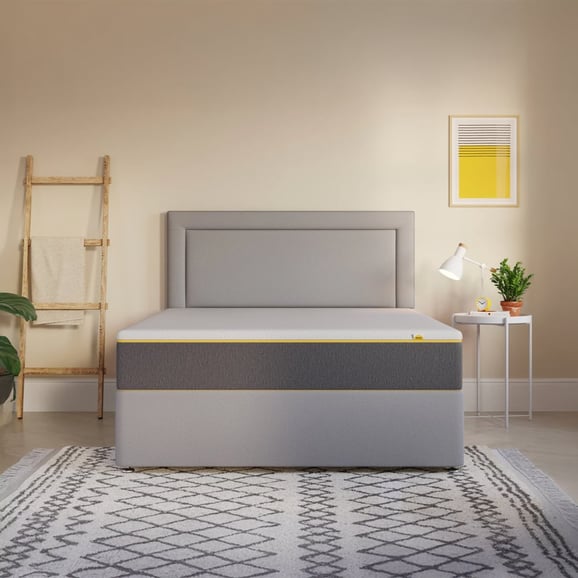
Measure the height from the floor to the top of the mattress, then check it while sitting down because the edge will compress under you. A divan and a deeper mattress raise the sleeping surface; a low frame lowers it. A divan is usually my preference for a sprung mattress, but its finished height still needs to suit you. There is no useful universal height to buy by.
In Morse and colleagues' study , fifteen hospital patients with various disabilities were observed getting into and out of hospital beds. The standard bed was too high for some patients to get into or out of, and the authors concluded that one deck height did not suit everyone.2
“ The standard bed was too high for some participants, both for ingress and egress. Side rails were used by most participants when entering, turning in bed, and exiting.
In the showroom, sit where you would sit to put your socks on, then stand as you normally would. You need to know whether your feet reach the floor properly and whether you can get up without hauling yourself forwards. If you're buying for a parent, let them do this check themselves where possible: your comfortable sitting height may be quite different from theirs.
A reinforced or foam-encased edge is worth looking for because it helps the side hold its shape under a seated person. Check the actual feel as well as the description. A soft ring around a firm middle is precisely the problem to catch, and "extra support" in silver lettering is a bloody poor substitute for sitting on it. The edge should remain stable while you dress and move towards standing.
A responsive surface makes turning easier without sacrificing cushioning
Choose a surface that cushions your hips and shoulders but lets you change position easily. Pocket springs with a responsive comfort layer are the best all-round starting point to my mind. The adverts can keep their endless sinking shots; disappearing into a mattress is hardly the only measure of comfort.
Deep memory foam holds your shape after you move, so you have to lift yourself out of the hollow to turn. Pocket springs, latex and springy foams respond more quickly. If you turn often or already find turning difficult, favour that quicker response over a deep, enveloping feel. Memory foam also feels warm for hot sleepers, which is another reason to be selective about how much of it sits above the springs.
A lighter, thinner body needs enough softness at the surface for the hips and shoulders to sink a little. You can have that cushioning over a supportive core; a soft comfort layer does not mean the whole mattress must sag. For a side sleeper especially, an unyielding surface can feel like a plank, even when the shop calls it medium-firm.
During a showroom visit, spend a full ten minutes lying in your usual position before checking how easily you can roll over. A quick sit and a polite nod are very convenient for the salesperson, but they tell you little about lying down for longer. Notice whether you feel concentrated pressure at your shoulder or hip and whether you can settle comfortably after turning. Showroom time is most useful for ruling out an unsuitable feel.
For longer spells in bed, cushioning and easy movement both matter. Don't buy the deepest soft top simply because it feels inviting for the first minute: you still need support underneath and a surface you can move on. I favour a pocket-sprung hybrid with a responsive top for that balance, with a softer top for a lighter sleeper.
An adjustable base is worth considering when you use its positions
An adjustable base is worth considering if raising your head or knees makes reading, sitting up or getting in and out more comfortable. I think adjustable and smart beds are overpriced for most people, but these are practical reasons to pay for movement. The accompanying sales pitch about transforming your entire life can be left in the showroom.
Try the positions you expect to use, including returning the bed to the position you need for getting out. Check that the controls are comfortable to hold and easy for you to operate. A demonstration with somebody else pressing all the buttons is rather like being shown a car without touching the steering wheel; you need to know whether you can use it comfortably yourself.
In Khan and colleagues' study , twenty people with night-time reflux slept flat for one night and then for six nights with the head of the bed raised on a 20-centimetre block. Night-time acid exposure fell.1
The mattress must bend with the base. Suitable constructions include foam, latex and pocket springs specifically made for adjustable bases; an ordinary pocket-sprung mattress is not automatically compatible. Open coil and a rigid rod edge are unsuitable. Check compatibility before ordering, because a mattress that stays rigid cannot follow the raised sections properly.
If you share a bed and want to change positions independently, a dual base takes two mattresses. That also gives you room to choose different feels if your comfort needs differ. When you compare adjustable bed frames , check the finished bed height as well as the movement, and choose a compatible mattress from the adjustable mattress range . Raising the head is only one part of whether the whole bed suits you.
Choose for your weight and sleeping position, then plan the upkeep
Choose the mattress feel around your weight and usual sleeping position, and choose its upkeep around who will actually do it. Age alone gives you neither answer. I wouldn't accept "orthopaedic" as a reason to buy: it is an unregulated label, and the trade has had quite enough mileage out of that word.
Start around medium-firm, then adjust for your body. Lighter sleepers generally need more give, particularly on their sides; heavier sleepers need stronger support underneath. Brand firmness descriptions differ, so compare how you sink into each mattress instead of treating two "medium" labels as equivalent. Apparently agreeing on the meaning of one ordinary word was too much to ask of the mattress industry.
These are comfort rules of thumb, not clinical thresholds. Use the table to narrow your showroom choices, then check the feel in your own sleeping position.
Your weight and position What to try What to check while lying down Lighter, mainly on your side A softer comfort layer over supportive pocket springs Your shoulder and hip can sink comfortably without your middle sagging Lighter, mainly on your back A responsive surface with some give You feel supported without being held rigidly on top Heavier, mainly on your side Stronger underlying support with cushioning above it Your hips are cushioned without sinking much lower than your shoulders Heavier, mainly on your back or front A firmer, supportive core Your middle does not sink deeply and you can change position easily You change position often Pocket springs with latex or another responsive comfort layer You can roll over without lifting yourself out of a deep hollow
Choose a one-sided, rotate-only mattress if nobody can help with lifting. A two-sided mattress needs flipping, and that is a substantial job. If you prefer a two-sided build, arrange the help before buying. Rotate a one-sided mattress every few months in line with its care instructions so you vary the areas receiving the most use.
A washable protector is practical, although I'm fussy about how much extra fabric goes over a breathable mattress. Choose a washable one that doesn't feel hot or stiff beneath the sheet, and follow its washing instructions. Wash bedding weekly and air the room; those are straightforward habits you can keep without buying a care package at the till.
Allow some adjustment time: the feel during the first fortnight can differ from what you settle into afterwards. Read the comfort-return terms before paying, then write down whether turning and edge sitting feel easier and whether you're comfortable for longer stretches. The trial is useful only if you know when and how to use the return option. Don't use an adjustment period as a reason to ignore new symptoms.
New pain, pain that is worse at night or wakes you, numbness or weakness in a leg, or skin over a pressure point that stays red after you move off it, is a GP or district nurse matter and not a mattress question. Speak to them before buying anything.
Avoid constructions that make everyday use harder
Rule out these mismatches before considering the upholstery or a discount. Neither elaborate stitching nor an impressive showroom display changes how you sit, turn or maintain the bed. And I think the "made for older backs" pitch deserves particular suspicion when all you're being offered is a harder surface.
A low frame with a thin mattress if you struggle to stand from low seats. The combined height leaves you starting too close to the floor.A soft edge if you sit on the bed to dress every morning. You need the side to hold steadily beneath you.Deep memory foam if you turn often or find turning difficult. Its slow response leaves a hollow you have to move out of."Orthopaedic" bought as proof of suitability. The word gives you no useful information about edge stability, height or how comfortably you can move.A two-sided mattress without help to flip it. A rotate-only build is the more practical purchase when you need to manage maintenance yourself.