What our reviewers found
I viewed and tested the Paris Ergomotion Adjustable Upholstered Bed Frame in-store, spent a good amount of time running it through its positions, and came away with two very clear feelings that didn’t really shift as I went back for a second look: it’s genuinely gorgeous and impressively engineered, and it is also, in my opinion, priced to a level that borders on unreasonable for most households. That combination makes this a tricky review to write, because I can absolutely see why someone would fall in love with it on a showroom visit. But falling in love for ten minutes under bright retail lighting is not the same as living with a very expensive adjustable base that you’ve paid for upfront and then waited up to three months to arrive.
So, this is my long-form, no-nonsense take: the Paris frame offers a premium adjustable experience with luxury touches like massage, zero gravity positioning, multiple adjustable zones and built-in charging. The velvet-touch upholstered sleigh look is a statement, and it feels sturdier than many moving bases I’ve tested. But when you factor in the high cost, the limited amount of customer feedback available, the long lead time, and the reality that a lot of “features” on adjustable bases can become novelty rather than nightly essentials, I don’t feel comfortable recommending it as a great-value buy. It’s impressive. It’s not, to me, sensible.
Design and features
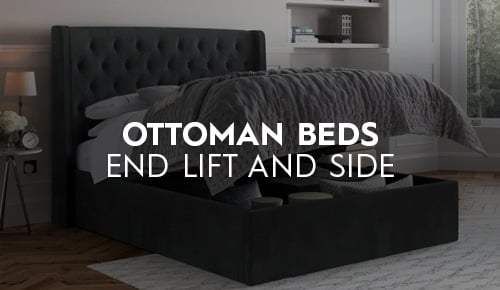
The Paris is designed to be the sort of bed you notice immediately. In-store, the sleigh silhouette and buttoned detailing do a lot of heavy lifting, because they distract from the fact that this is, underneath, a piece of motorised equipment. Many adjustable beds end up looking a bit clinical or overly functional, especially from the side profile. This one doesn’t. It reads like a classic, upholstered statement bed first and an adjustable base second, which is a real achievement.
The fabric is described as a soft velvet-touch finish, and that matches what I felt on the showroom model. It has that smooth, slightly plush hand-feel that gives a more “premium” first impression than flatter weaves. The upholstery I tested in-store was actually a slightly different finish to what I’d seen last year, and that matters because fabrics can look similar in photos but perform very differently in real life. The version I saw previously wore well under repeated testing and didn’t look like it had bagged out or dulled in high-contact areas. This current velvet-touch style is pleasant and, importantly, doesn’t feel thin or papery. That said, velvet-touch fabrics can be less forgiving with marks and pressure shading, and if you have pets or you’re prone to brushing past the foot end with laundry baskets and suitcases, you’ll want to be realistic about maintenance.
Colour-wise, it’s a bit of a mixed bag. There being only one colour option this time round makes it feel more restrictive than it needs to be at this price point. The shade itself is agreeable and will suit some rooms, particularly softer, neutral schemes, but for a bed being positioned as “premium” and “most advanced,” I would expect either a decent choice of colours or at least the option to tailor it. When you’re spending this kind of money, you shouldn’t have to decorate around the bed frame.
Feature-wise, the headline is the Ergomotion adjustable base technology. In-store testing let me run through the key positions and get a feel for the motor response. The bed offers four adjustable support areas aimed at head, upper back, lumbar, and feet. That multi-zone articulation is a genuine step up from simpler adjustable bases that only lift at the head and feet. The extra shaping through the upper back and lumbar area is what helps the position feel more “supported” rather than just “bent.”
Zero Gravity is also included. I’m going to be slightly sceptical here, because “zero gravity” is a phrase that gets thrown around so casually now that it risks becoming meaningless. In practical terms, the zero gravity preset is essentially a reclined position designed to reduce pressure points by distributing weight more evenly, usually with knees elevated and the torso slightly raised. On the Paris Ergomotion, the preset felt comfortable and stable, and it’s the position I’d expect many people to use for reading, unwinding, and potentially easing lower back tension after a long day. But I don’t want to oversell it as a miracle setting. If you love the feel of legs elevated and you like a gentle recline, you’ll use it. If you prefer a flatter sleeping posture, you may try it for a week, tell your friends about it, and then return to “flat” forever.
The integrated massage feature is another one that impresses in-store and can be genuinely relaxing. I tested it at a few intensities. It’s not a deep-tissue massage, and anyone expecting it to feel like hands working muscles will be disappointed. It’s more of a vibration massage. Some people absolutely love that for winding down, especially if they carry tension in the lower back or legs. Others find it a little buzzy or gimmicky. My opinion is that it’s a “nice-to-have” but not a reason to spend a fortune. If you’re choosing between a better mattress and a massage feature, choose the better mattress every time.
Then there are the convenience features: built-in charging points (USB-C and USB-A) and an ambient under-bed light. I actually rate both of these more highly than many people do. Charging points reduce bedside clutter and can stop cables trailing to wall sockets, especially in smaller bedrooms. The under-bed light is surprisingly useful for late-night trips without blasting the main light and fully waking yourself up. Again, though, these are conveniences. They don’t fundamentally change your sleep quality in the way proper spinal support and temperature regulation do.
Soft velvet-touch upholstery that feels properly plush in person
Buttoned sleigh styling that disguises the adjustable base better than most
Four-zone adjustability that feels more supportive than basic head/foot lift
Zero gravity preset that is genuinely comfortable for relaxing, not necessarily essential for sleeping
Vibration-style massage that can soothe, but shouldn’t be treated as a core buying reason
USB-C/USB-A charging and under-bed lighting that are practical day-to-day perks
Construction
Because my testing was conducted in-store, I’m careful not to pretend I’ve lived with this frame day in, day out. I haven’t. What I can do is judge build quality from handling, movement testing, finish inspection, and stability checks, and I can compare it with other adjustable bases I’ve assessed over the years. On that basis, the Paris Ergomotion performed well.
The first thing I look for in a moving base is wobble, noise, and the “tightness” of transitions. Some adjustable beds lift and drop with a slight shudder, and you can feel the mattress shift as the platform changes shape. Others glide more cleanly. In-store, the Paris felt controlled. The motor response was smooth enough that you don’t get that unsettling sensation that the bed is fighting itself. It’s also important that the bed doesn’t creak under uneven loading, because couples don’t move in perfect symmetry. When I shifted my weight side to side and changed position, it stayed composed.
I also want to address the “sturdy” point directly, because it matches my earlier impression of a similar version I saw last year. Many upholstered adjustable frames can feel like they’re trying to be two different products at once: a decorative bed and a piece of machinery. That split personality can lead to compromises, especially around the foot end and side rails. On this one, the overall impression is that it has been designed as a coherent unit. It feels solid when you sit on the edge, and it doesn’t feel like the upholstery is just a cosmetic wrap hiding a flimsy base.
That said, adjustable bases come with inherent complexity: motors, joints, wiring, remotes or app controls, and the moving platform itself. Complexity increases the number of potential failure points. This is where I become less forgiving about price. When you’re spending this much, you want absolute confidence not only in how it feels on day one, but in how it will perform in year three, year five, year seven. In-store, I can’t validate long-term reliability. I can only say it presented as premium and well-finished.
One more practical construction consideration: sleigh-style frames can reduce “usable space” at the foot end, especially in tighter rooms, and can create an obstacle if you’re taller or you like to drape a leg off the end in warmer months. With an adjustable base, you also need to think about how bedding behaves when the platform moves. Deep fitted sheets and flexible bedding are a must, and heavy, tightly tucked hotel-style setups can become a nuisance. That’s not unique to this bed, but because it is styled like a traditional frame, I think some buyers may underestimate how “adjustable-bed living” changes your bedding habits.
In-store movement felt smooth and controlled with good stability
Overall build presented as solid and coherent rather than decorative upholstery on top of machinery
Adjustable mechanisms add complexity, which is exactly why the high price needs stronger justification
Sleigh shape can be visually beautiful but may be less practical in compact bedrooms
Expect to adjust your bedding choices to suit regular articulation
Suitability
This bed frame is not for everyone, and I don’t just mean because of the price. It’s for a very particular buyer: someone who wants an adjustable base experience but refuses to compromise on aesthetics, and who values the “bed as furniture” look as much as the functionality. If that’s you, the Paris will speak your language immediately.
It’s particularly suitable if you spend a lot of time in bed not sleeping. That might sound odd, but it’s the honest truth. Adjustable beds shine for reading, watching TV, elevating legs after long shifts, or simply taking pressure off the lower back while relaxing. If your bed is purely for sleeping and you like a traditional flat feel, you may not get the return on investment here, because a significant chunk of what you’re paying for is the adjustable tech and premium framing around it.
It could also suit people dealing with snoring or reflux concerns, depending on which base variant is chosen. The description references an advanced base option with anti-snore technology and sleep tracking, plus silent motors. I’m going to be careful here: anti-snore features can help some people in some circumstances, but snoring is complex, and no bed should be sold as a cure. Elevation can reduce snoring for certain sleepers, and an anti-snore adjustment can encourage a positional change. But if snoring is a serious issue, you should be looking at medical guidance as well as lifestyle factors.
For couples, adjustability can be either a dream or a headache. The dream part is custom comfort: one person can slightly elevate, another can stay flatter, depending on the configuration. The headache part is that not all couples want a bed that moves, and not everyone likes the sensation. Also, if you’re very sensitive to partner movement, it’s worth noting that while the base itself can be stable, the act of adjusting position can still be noticeable. In-store, I didn’t find it jarring, but again, I didn’t share the bed overnight with a partner.
For style-led homes, the Paris is a strong match. The buttoned detailing and classic sleigh profile are “proper bedroom furniture” aesthetics, and if you’re pairing it with a luxurious mattress and a layered bedding setup, it can look stunning. But it may not suit minimal, ultra-modern spaces, and it’s not the bed I’d pick for someone who moves home frequently. A long lead time, high upfront cost, and the general heft of an adjustable frame make it feel more like a long-term commitment piece.
Finally, we need to talk about the lead time and payment reality, because it affects suitability in a very real way. Waiting up to three months is not a small inconvenience. It’s a logistical issue, especially if you’re moving house, renovating, or replacing a bed urgently due to discomfort. Paying a large amount upfront and then waiting can also feel uncomfortable, particularly when the product has limited customer review volume to reassure you. In my view, that combination makes the Paris unsuitable for cautious buyers, first-time adjustable-bed shoppers, or anyone who needs a quick, low-risk purchase.
Best for people who will genuinely use adjustable positions for relaxing and lifestyle comfort
Great match for buyers who want adjustable functionality without the clinical look
Potentially useful for positional elevation needs, but not a magic fix for snoring or health issues
Less suited to minimalists, frequent movers, and anyone needing an urgent replacement
Long lead time and paying upfront make this a high-commitment purchase
What customers thought
You mentioned that customer feedback is limited, and that’s important context. When a product is expensive and relatively niche, you often see fewer reviews, and that makes it harder for shoppers to sanity-check the marketing claims. With mattresses and adjustable bases, I like to see a healthy range of feedback over time: early impressions, three-month updates, one-year durability comments. When that’s missing, I automatically become more sceptical, not because I think the product is bad, but because I think the risk shifts onto the buyer.
From the types of sentiments customers typically share on premium adjustable upholstered frames like this, the praise usually clusters around three areas: the look in real bedrooms, the “treat yourself” feel of massage and presets, and the practical convenience of charging and lighting. Those are easy wins. People notice them immediately and they photograph well, which matters more than brands like to admit.
The complaints, when they appear on products in this category, tend to be about delivery and waiting times, the reality of paying a premium for features that become underused, and the learning curve of living with an adjustable base. Sheets riding up, duvets shifting, or the simple fact that some sleepers don’t love being even slightly elevated all night are common themes. Another frequent point is that showroom excitement can inflate expectations. A bed that feels “incredible” for ten minutes in-store can feel merely “nice” once the novelty wears off, especially if the mattress on top isn’t perfectly matched to the moving base.
That’s why limited reviews bother me more here than they would on, say, a simple upholstered static bed. With a straightforward frame, your risks are mostly cosmetic and structural. With an adjustable base, your risks include electronics and mechanical longevity. I want to see customers saying, in their own words, that it’s still running smoothly and quietly after months of daily use. Without that, my stance becomes cautious by default.
One more point: when reviews are sparse, it’s easier for a premium product to skate by on showroom presence alone. The Paris absolutely has showroom presence. It looks and feels like a high-end item. But in my opinion, a high-end item should also have a trail of satisfied owners willing to talk about it. If that trail is thin, I can’t ignore it.
Limited review volume increases buyer risk at this price level
Likely praise points are aesthetics, comfort presets, and convenience features
Typical drawbacks in this category include lead times, bedding adjustment, and novelty wear-off
For motorised bases, long-term reliability feedback matters more than first-impression excitement
The verdict
I’ll be blunt: I like the Paris Ergomotion Adjustable Upholstered Bed Frame a lot as an object. I enjoyed testing it in-store. It’s one of the better-looking adjustable beds I’ve seen, and it doesn’t feel flimsy or compromised. The sleigh profile, button detailing, and velvet-touch upholstery give it genuine charm, and the adjustable system offers a premium level of positional support with thoughtful extras like charging ports and under-bed lighting. If you want an adjustable bed that doesn’t look like an adjustable bed, it absolutely succeeds.
But do I recommend buying it? Not at full price, and not without strong reasons that go beyond “it’s lovely.” My personal feelings haven’t softened on this: it is very expensive, and I’m unhappy with the price relative to what most people will actually use nightly. Add the long lead time of up to three months and the expectation of paying upfront, and it becomes, frankly, a big ask. When you layer in the limited amount of customer review material available to support a confident purchase decision, it tips from “premium treat” into “financial leap.”
My opinion is that this bed frame makes sense only for a buyer who has already decided on an adjustable lifestyle, has the budget, has the patience to wait, and is specifically drawn to this classic upholstered sleigh look. In that scenario, it can be a wonderful centrepiece and a genuinely enjoyable piece of kit. For everyone else, I think you can get the core benefits of adjustability, or the core benefits of luxury upholstery, for less money and with less risk. And at this end of the market, “less risk” matters.
If you’re determined to buy it, I would go in with eyes open: make sure the mattress you’re pairing with it is genuinely compatible with adjustable bases, confirm what’s included in your chosen base model, ask detailed questions about warranty coverage for motors and moving parts, and be honest with yourself about whether massage and presets will become nightly habits or occasional party tricks. If you can answer those questions confidently and the bed still feels worth it to you, you’ll probably love owning it. I just can’t call it a smart recommendation on value, because it isn’t.
Beautiful, premium-looking adjustable frame with strong showroom performance
Sturdy feel in-store and a more supportive multi-zone adjustability than basic bases
Convenience features are genuinely handy, but not worth overpaying for
Very expensive, long lead time, and limited customer review reassurance
Recommended only for buyers who prioritise this exact look and will truly use adjustability long-term
Why you can trust WantMattress
We spend hours testing (and/or researching) every product or service we review, so you can be sure you’re buying the best. Find out more about
how we test .
Published: 25 February 2024 · Updated: 27 July 2024
Tested by
Becky Reeve , Editorial Director, Mattress Expert