Sleep isn't just lights out, but there's no agreed nightly target for deep sleep. If you've checked your tracker this morning and wondered whether you got enough, I wouldn't turn that number into another bedtime worry. Aim for 7 to 9 hours of sleep in total, rather than trying to reach a particular number of deep sleep minutes.
Deep sleep in brief
There isn't an agreed number of deep sleep minutes you need each night. Aim for 7 to 9 hours of total sleep; most deep sleep comes early in the night, and its share of your sleep falls as you get older. A regular sleep routine helps, so keep your bedtime and waking time consistent.
Deep sleep helps restore the brain's ability to learn
Deep sleep supports your ability to learn movements you've practised. It's also called slow-wave sleep, and your heart rate and breathing slow during this stage.
In a small study, Fattinger and colleagues (2017) found that disrupting slow waves after participants had practised a movement task reduced the restoration of the brain's learning efficiency.1 That supports a role for deep sleep in learning movements; it doesn't establish the same effect for every kind of learning.
Most deep sleep comes early in the night
You spend more time in deep sleep in the first part of the night, with less of it as the night goes on.
It's harder to wake from deep sleep. If you're woken during it, you can feel groggy and need a little time to feel fully awake.
How much deep sleep do you need?
There's no agreed nightly target for deep sleep. Aim for 7 to 9 hours of total sleep, as the NHS recommends, and the deep sleep mostly looks after itself.4
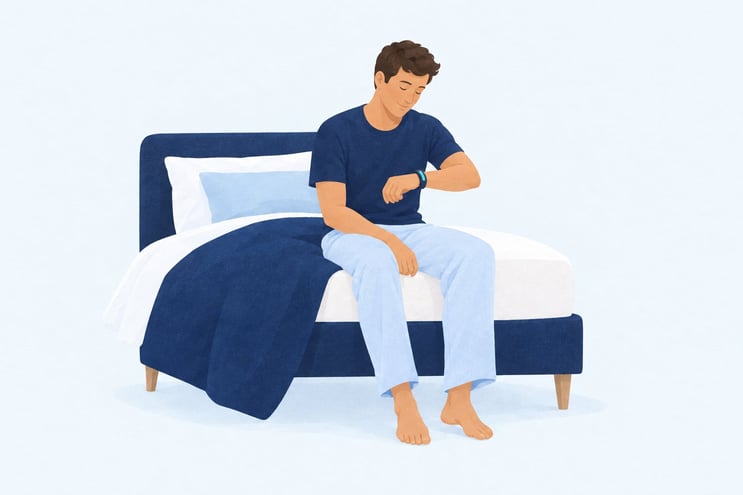 Trackers estimate sleep stages from movement and heart rate, so treat the deep sleep figure as a rough guide.
Trackers estimate sleep stages from movement and heart rate, so treat your deep sleep figure as a rough guide. A precise number on a screen doesn't make it an exact measurement.
Deep sleep changes with age
Deep sleep makes up a smaller share of your sleep as you get older, according to Ohayon and colleagues' 2004 meta-analysis.3 Don't use your younger self's sleep as a target: some change is part of ageing.
Your sleep timing can change too. Wolkove and colleagues' 2007 review describes how older people often go to bed and wake earlier, and how many sleep disorders become more common with age.2
Short sleep can make learning a physical skill harder
Fattinger's finding points to less efficient learning when you're short of deep sleep. Protect your total sleep before practising a physical skill, even if that means leaving a little less time for practice.
Everyday habits can help you sleep better
The NHS advice on insomnia is a sensible place to start if you're struggling to sleep.
- Wake-up time: Get up at the same time every day.
- Time to relax: Allow at least an hour to relax before bed.
- Tea and coffee: Avoid tea or coffee for at least 6 hours before bed.
- Your bedroom: Keep it dark and quiet, and use the bedroom checker if you'd like help checking your room.
- Getting help: Speak to a GP if changing your sleep habits doesn't help.
Questions people ask about deep sleep
Is my tracker's deep sleep number accurate?
It's an estimate from movement and heart rate, not a measurement of brain waves. Treat a low reading as something to consider alongside how you feel during the day. If you've felt rested and alert, one disappointing number isn't a good reason to change your bedtime. I wouldn't spend the next evening worrying about whether the app will approve of my sleep.
Why do I get less deep sleep as I get older?
The share of sleep spent in deep sleep falls with age in adults, according to Ohayon and colleagues' meta-analysis. An average across adults doesn't tell you how many minutes you personally need. Avoid comparing your number with a younger person's as though you should match it. If sleep difficulties are affecting your day, explain those difficulties to your GP instead of putting everything down to age.
Can I get more deep sleep?
Give yourself enough time for total sleep and keep a regular routine to support your sleep. I wouldn't count on any product or trick to add deep sleep, or buy something for that promise. Choose habits you can maintain during a normal working week. How you feel during the day is a more useful reason to keep those habits than the hope of earning a better stage score.