Acid reflux is often worse when you lie down, but a few changes to evening meals and how you lie in bed can help you sleep more comfortably. Being woken by reflux is unpleasant enough without struggling to settle again afterwards. Start with those everyday habits rather than assuming you need a different mattress.
Acid reflux at night in brief
For reflux at night, start with meal timing and your sleeping position: don't eat in the 3 or 4 hours before bed, raise the head of your bed by 10 to 20cm rather than stacking pillows, and try sleeping on your left side. See a GP if you have heartburn most days, or if it comes with food sticking, frequent sickness or weight loss.
What is acid reflux?
Acid reflux is when stomach acid travels back up towards your throat; the burning feeling it can cause in your chest is called heartburn. The NHS explains that if it keeps happening, it may be called gastro-oesophageal reflux disease (GORD). An occasional bout doesn't automatically mean you have GORD.
A ring of muscle at the bottom of your food pipe, the oesophagus, normally stops acid coming back up. It opens when you swallow, then closes again. If it doesn't close properly, stomach acid can flow back into your oesophagus.
Reflux can make it harder to settle and stay asleep
Burning or a sour taste can wake you or stop you settling to sleep. The discomfort doesn't have to last all night to spoil your rest.
The NHS says reflux symptoms are often worse after eating and when lying down. That combination helps explain why bedtime can be particularly uncomfortable after an evening meal.
Reflux often has no obvious cause
There's often no obvious reason for heartburn, according to the NHS, but several things can cause it or make it worse. What you've eaten isn't the only thing to consider.
- Certain food and drink: Coffee, tomatoes, alcohol, chocolate and fatty or spicy food can worsen reflux, so pay attention to whether symptoms follow particular drinks as well as meals.
- Being overweight: Hampel and colleagues' 2005 review found a higher risk of reflux symptoms in people who were overweight, so discuss weight management with your GP if this applies to you.1
- Smoking: Smoking can make reflux worse, so ask a pharmacist or GP for support to stop.
- Pregnancy: Pregnancy can cause or worsen reflux, so ask your midwife or pharmacist about suitable relief.
- Stress and anxiety: These can make reflux worse, so note whether difficult days coincide with worse symptoms.
- Some medicines: Medicines such as ibuprofen can worsen reflux, but don't stop prescribed medicine without speaking to a doctor.
- A hiatus hernia: A hiatus hernia can cause reflux, so mention it when seeking advice if you've been diagnosed with one.
Acid reflux can cause more than heartburn
A cough that keeps coming back or a hoarse voice can also be symptoms of reflux. The NHS lists these symptoms:
- Heartburn, a burning feeling in the middle of your chest
- A sour taste in your mouth
- A cough or hiccups that keep coming back
- A hoarse voice
- Bad breath
- Bloating and feeling sick
Evening habits and sleeping position can ease reflux at night
A gap between your last meal and bedtime can help ease reflux at night. Stop eating 3 or 4 hours before bed and loosen tight waistbands, as the NHS advises. Tight clothing is easy to overlook when you're concentrating on what you've eaten.
Try sleeping on your left side. In Schuitenmaker's 2023 study, 27 people used a wearable that discouraged sleeping on their right side.3 They spent more of the night on their left side and had fewer reflux episodes; 70.4% said their symptoms improved. This was a small study without a control group, so it cannot establish that the change in position caused the improvement.
Smaller meals and avoiding your own triggers can ease reflux
Smaller, more frequent meals can help ease reflux, according to the NHS. Spread your food across smaller meals. Don't drink too much alcohol, as this can also make symptoms worse.
A food diary beats guessing which foods you need to cut out. Keep a simple note of what you ate and drank before a bad night. Avoid the food and drink you notice trigger your symptoms; you don't need to give up every common trigger if it doesn't bother you.
Raise the head of your bed to help ease reflux
Keeping your chest and head above your waist can help ease reflux at night. Raise the head of your bed by around 10 to 20cm with wood, bricks or books, as the NHS advises.2 Don't stack extra pillows instead, because that can increase pressure on your belly and make reflux worse.
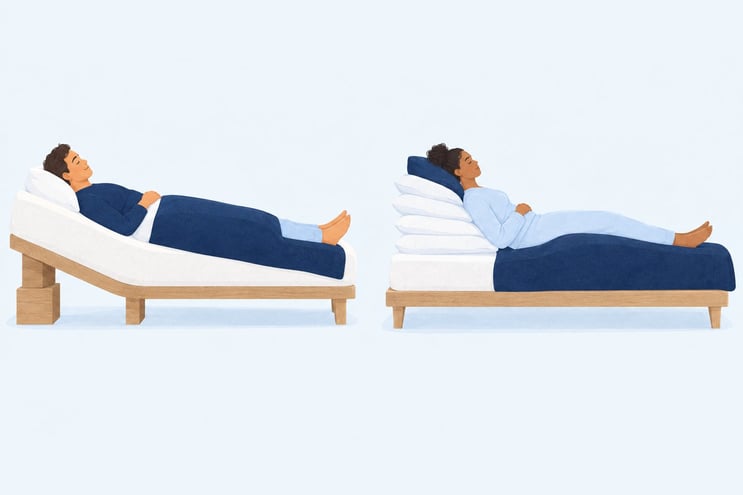 Raise the head of the bed on blocks, as on the left. A stack of pillows, as on the right, can press on your belly.
In my view, a mattress isn't a treatment for reflux; it only needs to be comfortable enough for you to stay on your side. An adjustable bed base that raises the head end does the same job as blocks.
When to see a pharmacist or GP about reflux
Ask a pharmacist for advice if heartburn keeps happening. They may suggest antacids or alginates, which are best taken with or soon after food. The NHS says these medicines ease symptoms in the short term, but won't cure the problem and shouldn't be taken regularly for long periods.
See a GP if:
- lifestyle changes and pharmacy medicines are not helping your heartburn
- you have heartburn most days
- you also have other symptoms, like food getting stuck in your throat, frequently being sick, or losing weight for no reason
If at any time you feel your symptoms are getting worse, contact a GP, go to 111.nhs.uk or call 111. (NHS)
Questions people ask about acid reflux at night
What is the best sleeping position for acid reflux?
Try sleeping on your left side with the head of the bed raised. Schuitenmaker's small study supports trying the left side, though it doesn't establish a best position for everyone. You don't need to regard waking in another position as a failed night. If you wake on your right side, turn back onto your left when you settle again.
Should I sleep with extra pillows for reflux?
No, extra pillows can increase pressure on your belly and make reflux worse. The NHS advises raising the bed instead. It's easy to reach for another pillow when you're uncomfortable, but a taller pillow pile isn't the aim. Keep your usual pillow for comfort and make the change at the head end of the bed.
How long before bed should I stop eating?
Stop eating 3 or 4 hours before bed, as the NHS recommends. Count from your last food, including any evening snack. Work backwards from your usual bedtime to find a practical time to finish eating. An early dinner doesn't create that gap if you eat again later, so include the small things when you think through your evening routine.
Can a mattress help with acid reflux?
A mattress doesn't help reflux directly; raising the head of the bed is what can help. I'd leave a comfortable mattress alone rather than shop because of heartburn. If you're replacing it anyway, separate your comfort needs from your reflux symptoms. A mattress described as suitable for reflux still isn't a substitute for changing the angle of the bed.