Itchy nights in bed usually come down to one of two things: bed bugs, which bite, or dust mites, which trigger allergies. It's an easy mix-up when you're tired and uncomfortable, but the fix is different for each. Before you spend money trying to sort it out, work out which one you're dealing with.
Bed bugs or dust mites in brief
Bites in lines, blood spots and small brown spots on bedding point to bed bugs. Sneezing, a runny nose and itchy eyes point to dust mites. A washable mattress cover and synthetic bedding washed at 60C help with mites. Nothing you put on the bed stops bed bugs. For bed bugs, contact your local council or a pest control service.
Bed bugs hide in furniture as well as bedding
Bed bugs are small insects that live on furniture or bedding, so a mattress isn't the only place to look. The NHS describes them as dark yellow, red or brown, with adults around 5mm long.2 They hide on bed frames and mattresses, in clothing and furniture, behind pictures and under loose wallpaper.
Check those hiding places as well as your sheets. Signs include bites on skin exposed while you're asleep, spots of blood on bedding and small brown spots on bedding or furniture. It's easy to focus on the bed when that's where you've noticed the itching, but the surrounding furniture needs a look too.
Bed bug bites usually clear up in a week or so
Bed bug bites can be raised and itchy, often in a line or grouped together, according to the NHS. Some people react with very itchy, painful swelling, so the reaction isn't the same for everyone.
A severe allergic reaction is possible but rare. Bites usually clear up on their own in a week or so.
Dust mite allergy doesn't cause bites. It causes sneezing, a runny nose and itchy or watery eyes in bed.
You wake up sneezing with itchy eyes, but there are no bites or spots on your sheets. Which is more likely?
Sneezing and itchy eyes without bites point to a dust mite allergy. Bed bugs leave bites, blood spots and small brown spots.
Bed bug prevention starts with checking what you bring home
Checking furniture and belongings before they come indoors is a sensible precaution. The NHS also recommends keeping the area around your bed clear and cleaning regularly to help you spot bed bugs early.
- Keep clutter away from the bed.
- Check second-hand furniture carefully before bringing it into your home.
- Check luggage and clothing before bringing them indoors if you've been somewhere with bed bugs.
- Clean and vacuum regularly so you can spot bed bugs early.
Anti-allergy mattresses are for dust mites, not bed bugs
Anti-allergy mattresses and covers are made to limit exposure to dust mites. They do not repel or stop bed bugs. Buying one for bed bug protection is money wasted.
Mattress covers are a standard measure for dust mite allergy, as described in Klain's 2024 review.1 The NHS advises using synthetic bedding and covers, with bedding washed at 60C or above.3 Check the washing instructions before buying so you can keep to that routine.
Choose a mattress with a cover you can keep clean
For dust mite allergy, a removable, washable cover is a practical priority when choosing a mattress. Choose one with that option, or use a separate cover you can wash at 60C. When comparing mattress protectors and covers, look for those washing instructions rather than relying on an allergy label.
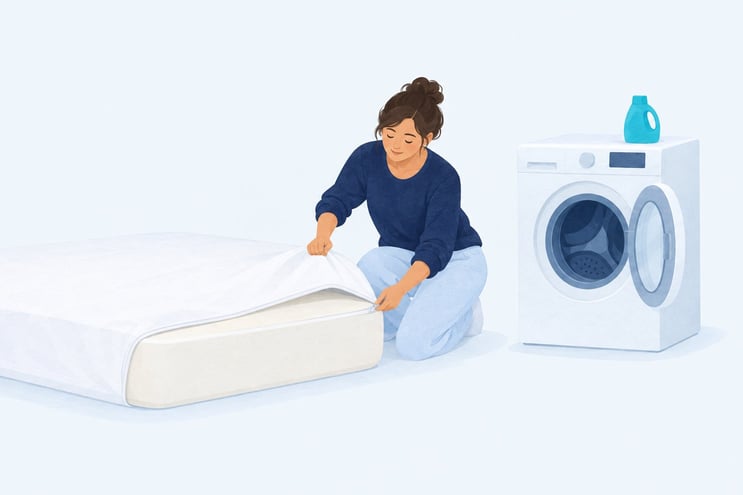 Choose a mattress with a removable cover, or use a separate cover you can wash at 60C.
The NHS recommends synthetic bedding. Beyond that, choose a mattress that suits how you sleep: you still need to feel comfortable on it every night. When browsing anti-allergy mattresses, give that comfort as much attention as the cover.
How to treat bed bug bites
A clean, damp cloth can help ease itching and swelling from bed bug bites, according to the NHS. Keep the area clean and don't scratch. A pharmacist can advise on mild hydrocortisone cream; children under 10 and pregnant women should get advice from a doctor first. Ask a pharmacist about antihistamines if the itching stops you sleeping.
See a GP if:
- bedbug bites are still very painful, swollen or itchy after trying treatments from a pharmacist
- the pain or swelling around the bites is spreading
You may have an infection and need treatment with antibiotics. (NHS)
Bed bugs need professional pest control
Contact your local council or a pest control service if you have bed bugs. The NHS advises this because they're very hard to get rid of yourself: they're difficult to find and may resist some insecticides. Don't wait until the infestation gets worse before asking for help.
While you wait, the NHS recommends washing affected bedding and clothing at 60C and tumble drying on a hot setting for at least 30 minutes. Follow that routine for washable items. Bag items that can't be washed and freeze them for 2 to 3 weeks. Vacuum regularly too. These steps are unlikely to clear bed bugs completely, so keep the pest control appointment even if you notice fewer signs of them.
Questions people ask about bed bugs and bed allergies
Can you be allergic to bed bugs?
A severe allergic reaction to bed bug bites is possible, but rare. The NHS says some people develop very itchy, painful swelling after bites. That stronger reaction doesn't automatically mean an allergy, so don't use the amount of itching alone to decide. It's understandable to call any reaction an allergy, but the distinction matters here.
Does an anti-allergy mattress stop bed bugs?
No, an anti-allergy mattress does not stop bed bugs. Anti-allergy products are aimed at reducing exposure to dust mites. A washable cover and synthetic bedding help with those. Don't buy a replacement mattress as a way to deal with bed bugs: the allergy label gives you no protection against them, however reassuring it sounds.
How can I tell bed bugs from dust mites?
Bites and bedding spots point to bed bugs; sneezing and itchy eyes point to dust mite allergy. Look for blood spots and small brown spots on bedding, alongside bites that may appear in lines or groups. Dust mite allergy also causes a runny nose. Itching alone isn't enough to tell the two apart, so check what else you're noticing.
What temperature kills dust mites and bed bugs in bedding?
Wash bedding at 60C; for bed bugs, add a hot tumble dry for at least 30 minutes. The NHS recommends that extra drying step for bedding affected by bed bugs. Check the washing instructions before putting bedding through the wash. Treating bedding is only part of dealing with bed bugs, because they also hide in furniture and around the room.