A baby waking several times a night in the first months is normal, and it won't last forever. That doesn't make the exhaustion any easier when you're awake again at 3am.
Sleep as a new parent in brief
Night waking is normal through your baby's first year. Rest when your baby sleeps, share nights in a way that fits how you feed, and accept help. Keep your baby in their own cot in your room. Plan ahead in case you fall asleep together, and never fall asleep with your baby on a sofa or armchair. If you can't sleep even when your baby does, see a GP or health visitor.
Rest when your baby sleeps, even if the chores have to wait
You don't have to finish the housework before you deserve a rest. The NHS advice on sleep and tiredness after having a baby is to try to rest when your baby sleeps, however tempting it is to catch up on chores.1 Set an alarm if you're worried about sleeping too long.
Ask a relative or friend to look after your baby while you nap, so you have time to rest. If you're on your own, ask whether they could stay for a few days. Exercise can also help you feel less tired: a daily walk with your baby is one of the easiest ways to get some movement without arranging separate time to exercise.
Your baby is safest in their own cot in your room
The Lullaby Trust says the safest place for your baby is their own separate sleep space, such as a cot or Moses basket, free from toys, blankets and pillows.2 Keep this in the same room as you for every sleep for at least the first six months. No device can replace a parent being in the room.
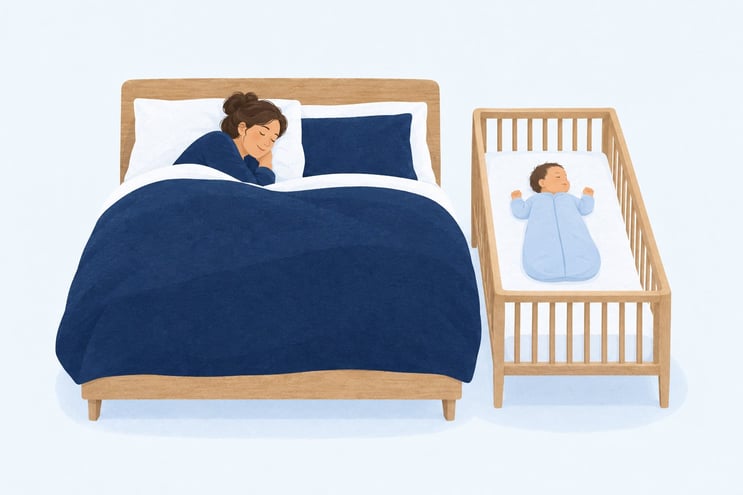 Put your baby in their own clear cot in your room for every sleep, for at least the first six months.
The Lullaby Trust says many tired parents fall asleep with their baby without meaning to, so make your bed as safe as possible in advance. Co-sleeping is very dangerous if anyone in the bed has recently drunk alcohol, smokes, or has taken drugs or medication that make them sleepy, or if your baby was exposed to smoking in pregnancy. It is also very dangerous if your baby was born before 37 weeks or weighed under 2.5kg at birth. In those cases, always put your baby in their own cot.
The Lullaby Trust's checks if you might fall asleep with your baby, before you lie down:
- Pillows and adult bedding are away from your baby
- Your baby is on their back
- No other children or pets are in the bed
- Your baby can't be trapped in the bed frame or headboard, fall out, or get wedged between the mattress and the wall
- Nobody in the bed has drunk alcohol, smokes, or has taken drugs or medication that make them sleepy, and your baby wasn't exposed to smoking in pregnancy
- You won't leave your baby alone in an adult bed
Never fall asleep with your baby on a sofa or armchair. It significantly increases their risk of SIDS, and they can slip into a position where they are trapped and can't breathe.
Frequent night waking is normal, so don't try to make your baby sleep deeper
Newborns have very small stomachs and usually wake at least every two hours to feed, according to the Lullaby Trust's advice on sleep deprivation.3 Most babies wake often through their first year, and by 12 months about a third have never slept all night. Don't compare your baby with others: another baby's sleep isn't a target yours needs to meet.
Don't encourage your baby to sleep longer or more deeply than is usual for their age. The Lullaby Trust warns that this may affect their ability to wake if something is wrong, such as their mouth and nose becoming covered, which is a risk for SIDS. Doing something differently from usual to get more sleep can be unsafe, however tempting it feels when you're exhausted.
Keep nights quiet and uneventful so your baby gradually learns that night is for sleeping. The NHS advice on helping your baby to sleep is to keep the lights low and your voice quiet.4 Put your baby down as soon as they've been fed and changed, only change them if they need it, and don't play with them at night.
Take steps to stay awake safely during night feeds
If you're feeding on a sofa, falling asleep with your baby would be dangerous. The Lullaby Trust has gathered parents' tips for staying awake during night feeds:
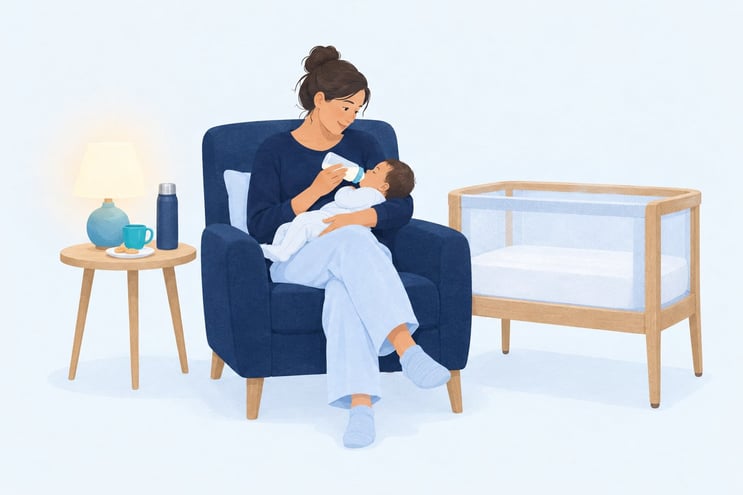 Keep a snack and a flask within reach, and if you feel yourself drifting off, put your baby in their cot first.
- Swap shifts with a partner, friend or relative.
- Keep a snack and a flask of a hot drink within reach.
- Have something entertaining to watch or listen to.
- Splash cold water on your face or use a cold flannel.
- Set alarms to vibrate.
If you feel yourself drifting off, put your baby in their cot first.
Share the nights in a way that fits how you feed
You can share the work even when you can't share every feed. The NHS suggests sharing feeds with your partner if you're formula feeding. If you're breastfeeding, your partner can handle nappies or dressing in the morning so you can go back to sleep. Once breastfeeding is going well, they could occasionally give a bottle of expressed milk at night.
Agree who is on duty before the night starts so the other person can sleep properly. It's easier to make that decision before you're both tired and waiting for the other one to get up.
Being unable to sleep when your baby sleeps can be a sign of postnatal depression
The NHS advice on postnatal depression says feeling tired all the time or being unable to sleep at night even when your baby is asleep could be signs.5 Other symptoms include low mood, finding it hard to enjoy anything and feeling hopeless or that you can't cope. The baby blues in the first days usually go within two weeks. If those feelings continue or get worse, get help. Fathers and partners can be affected too.
Postnatal depression usually gets better with treatment, so speak to your GP, midwife or health visitor if you think you might have it. You don't have to wait until you feel worse to ask. You can also refer yourself to NHS talking therapies. For advice on coping with a crying or restless baby, Cry-sis is available on 0800 448 0737, from 9am to 10pm, seven days a week.
Questions people ask about sleep as a new parent
Is it safe to bring my baby into bed with me?
Your baby's safest place to sleep is their own cot in your room. The Lullaby Trust's advice if you might fall asleep together is to keep pillows and adult bedding away from your baby, with no pets or other children in bed. Check your baby can't become trapped or fall out, and never leave them alone in an adult bed. Never share a bed if anyone has drunk alcohol, smokes or has taken drugs or medication that make them sleepy, or if your baby was exposed to smoking in pregnancy, was premature or weighed under 2.5kg at birth.
When will my baby sleep through the night?
There's no set age when your baby will sleep through the night. The Lullaby Trust says most babies wake often through their first year, and about a third have never slept all night by 12 months. I wouldn't put a deadline on it: a birthday isn't a reason to expect an uninterrupted night.
How do I make my baby's bed safe?
Use a clear cot with a firm, flat mattress, and put your baby on their back for every sleep.6 Keep loose blankets, pillows and soft toys out of the cot. The Lullaby Trust calls a baby sleeping bag that's well fitted around the neck and shoulders a good option for safer sleep, as it helps stop your baby wriggling down under covers.7 If you're unsure about choosing a bag, read our guide to baby sleeping bags for help with that decision.