Reading in bed can help you wind down, and the NHS lists reading a book as one way to relax before bed. A printed book is the better choice than a bright screen. If picking up a book means putting your phone down, that's already a good result.
Reading in bed, in brief
The NHS suggests reading a book to relax in the hour before bed. Choose a printed book over a light-emitting screen: in a lab study, people reading on the screen took longer to fall asleep and felt less alert the next morning. Sit up comfortably while you read, and put the book down when your eyes get heavy. Only go to bed when you're sleepy, even if that means doing your reading in a chair.
The NHS lists reading a book as a way to relax before bed
The NHS insomnia advice recommends relaxing for at least an hour before bed, for example by taking a bath or reading a book.1
"Sleep hygiene" makes winding down sound like another cleaning job. The advice is sensible anyway: give yourself a break from your phone before bed. A book is useful because you've got something to do that isn't scrolling. I still browse Vinted until I fall asleep with the phone in my hand, so I'm hardly a shining example. Leave yours out of reach while you read, rather than beside you ready for another look.
A printed book beats a bright screen at bedtime
Reading on a bright screen affected more than how quickly people fell asleep. In Chang and colleagues' study at Brigham and Women's Hospital in Boston, researchers compared reading an e-book on a light-emitting device with reading a printed book in the hours before bed.2
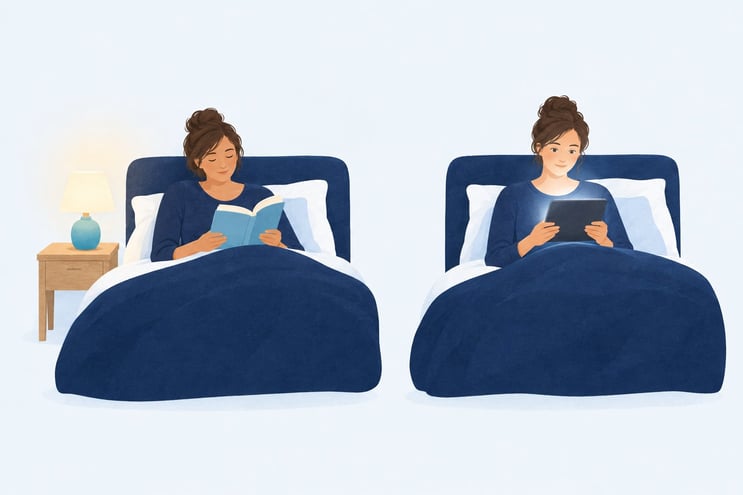 In a lab study, people who read a printed book fell asleep quicker and were more alert the next morning than when they read on a light-emitting tablet.
| After reading in the evening | Printed book | Light-emitting e-book |
|---|
| Falling asleep | Quicker | Took longer |
|---|
| Evening sleepiness | Sleepier | Less sleepy |
|---|
| Melatonin | More released | Less released |
|---|
| Body clock | Not delayed | Shifted later |
|---|
| Next morning | More alert | Less alert |
|---|
This was a small lab study of a light-emitting tablet, not e-ink readers or everyday phone use. The NHS also advises against smartphones right before bed because blue light makes you more awake. Keep screens out of your bedtime reading routine. For advice about younger readers, see our guide to screen time and children's sleep.
In Chang's lab study, which kind of evening reading left people more alert the next morning?
- A printed book
- An e-book on a light-emitting device
After the printed book they fell asleep faster and were more alert the next morning. The light-emitting e-book delayed their body clock and cut their melatonin.
Start at least an hour before bed and stop when you're sleepy
Bedtime reading works best as a way to slow down, not as another task you have to finish before you're allowed to sleep.
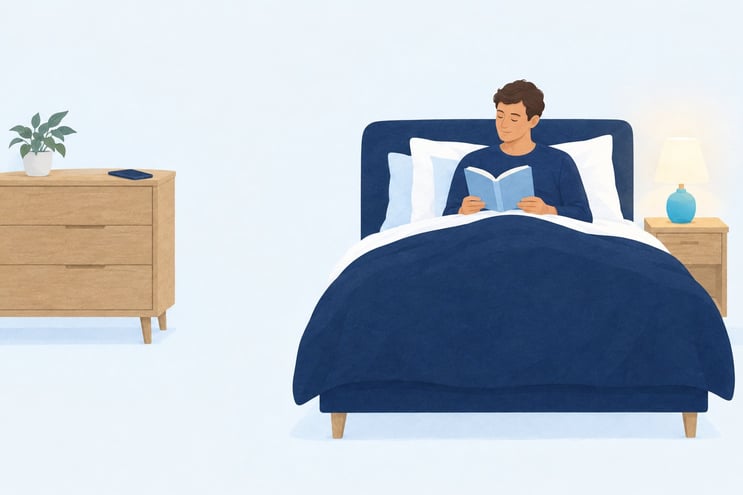 Sit up against the headboard with the right pillows, and put the book down when you're sleepy.
- Start winding down at least an hour out. A book fits neatly into that time, and it keeps your hands off your phone.
- Pick paper over a backlit screen. The printed book came out ahead on falling asleep, melatonin and next-morning alertness in the Chang study.
- Sit up properly. A headboard is there to sit against, and the right pillows help you avoid a cricked neck.
- Put it down when you're sleepy. The NHS says only go to bed when you're sleepy, so let the yawning decide, not the chapter.
A quick re-read before sleep helped students remember a text
In Malloggi and colleagues' study, 34 university students studied a short text. Eight hours later, some re-read it for just one minute before spending about eight hours asleep or awake. Only the students who re-read the text before sleeping recalled more than they had at their first attempt.3 Recall slipped slightly in every other group.
This involved 34 students and one short text, with findings about studying rather than reading for pleasure. It tells us nothing about sleeping better. It's handy if you've got an exam, but it's no reason to take a textbook to bed otherwise.
If you wake in the night, a dull book in dim light beats lying there
Waking at 3am is normal. My rule: after about twenty minutes awake, get up, keep the light dim and do something boring. A dull book is ideal, so save the thriller for daytime. Go back to bed only once you feel drowsy, as the NHS advises. If this happens most nights for a month, have a chat with your GP. For help tonight, try our guide to what to do when you can't sleep.
Questions people ask about reading in bed
Is it bad to read on your phone in bed?
For sleep, a phone is the worst thing to read on, to my mind, and the NHS warns against smartphones right before bed. If you're going to read on yours anyway, use night mode or a filter. Better still, keep it out of the last hour before bed. A phone also brings notifications that you wouldn't get from a book.
How long should you read before bed?
There's no set amount of time you need to read before bed. Reading can fill part of the wind-down hour, alongside a bath or whatever else relaxes you. You don't need to spend the whole hour with a book, so put it down the moment your eyes get heavy. A bookmark costs nothing, and the plot will still be there tomorrow.
Is an e-reader as bad as a tablet?
The Chang study can't tell us how an e-ink reader compares with a tablet. It compared a light-emitting tablet-style device with a printed book, so treating all e-readers as identical would stretch the findings. A printed book is the choice the evidence backs. If you use an e-reader, my advice is to turn the brightness down rather than leave it set for daytime reading.