Most urine stains come out with things you already have at home. The biggest risk is using too much liquid: a soaked mattress is much harder to dry. Go gently with the liquid, even when a dried stain looks as though it needs a good drenching.
Getting urine out of a mattress in brief
Blot first, don't rub. For a fresh stain, spray equal parts white vinegar and water, blot again, then add baking soda for at least a few hours before vacuuming. For a stain that has set, try the 3% hydrogen peroxide, baking soda and washing-up liquid mix. Never soak the mattress, as excess moisture is hard to dry. Check the care label, go gently with memory foam, and let it dry completely before making the bed.
Fresh and dried urine stains need different treatment
A fresh stain is still damp and comes out with vinegar and water. A dried stain has set, so it may need the stronger hydrogen peroxide mix. The same methods work for pet and adult accidents.
What are you dealing with?
- A fresh, damp stain
- A dried stain
- A child wetting the bed
You only need a few household things
Have these ready so you don't have to stop halfway through.
- Clean cloths or kitchen towel
- A spray bottle
- White vinegar
- Baking soda
- 3 per cent hydrogen peroxide and a little washing-up liquid, for dried stains
- A vacuum cleaner
Check your mattress's care instructions before you start, as materials vary (Silentnight).1
Clean a fresh urine stain with vinegar and baking soda
Strip off the bedding and put it in the wash.
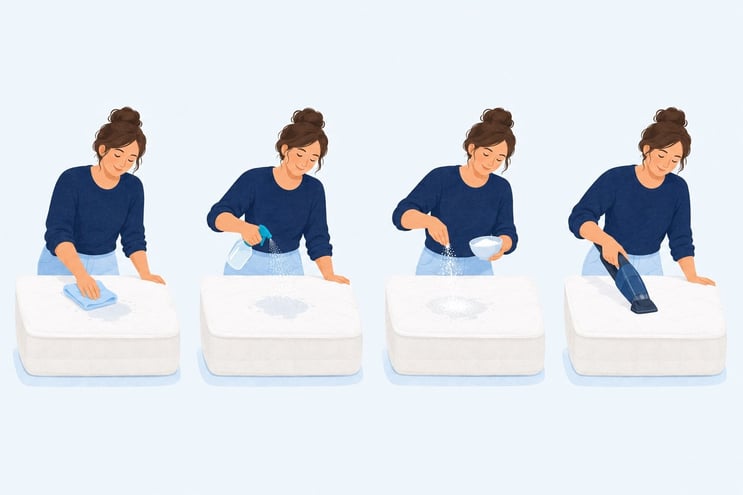 Blot, mist with equal parts vinegar and water, cover with baking soda for a few hours, then vacuum.
- Blot. Dab up the urine as soon as you can with a clean cloth or kitchen towel. Rubbing pushes it further into the mattress, so keep to gentle dabbing.
- Spray. Mix equal parts white vinegar and water in a spray bottle. Apply a light mist, then blot again. A soaking will leave you with much more moisture to dry out.
- Add baking soda. Sprinkle baking soda over the area and leave it for at least a few hours to absorb moisture and the smell, then vacuum it up.
- Let it dry. Make sure the mattress is completely dry before putting the bedding back on. Trapped moisture can lead to mould or mildew.
Use hydrogen peroxide on a stain that vinegar won't shift
Emma recommends this mix for bed-wetting stains.2 It's the stronger option to try on a stain that has set. If you've already tried vinegar, let the area dry fully first.
- Mix. Combine 1 cup of 3 per cent hydrogen peroxide, 3 tablespoons of baking soda and a few drops of washing-up liquid in a spray bottle.
- Spray. Apply over the stained area, taking care not to get the mattress too wet.
- Dry. Let the treated area dry completely, ideally in a well-ventilated room.
- Vacuum. Lift the dried residue with the vacuum.
Check your care label first, as Silentnight's guide advises against harsh chemicals.
Baking soda helps remove a lingering urine smell
If the stain has gone but you can still smell urine, sprinkle baking soda over the area. Silentnight says it absorbs moisture and neutralises the scent, so leave it for at least a few hours, then vacuum it up. Repeat if the smell lingers.
Pet accidents come out the same way
For a pet accident, blot up any liquid straight away, then use the fresh or dried stain method depending on how long it's been there. Keep the liquid light so the mattress doesn't get too wet. A waterproof mattress protector stops the next accident reaching the mattress. I'm not usually a fan of protectors, but with a pet that has accidents, one earns its keep.
Go gently with memory foam and only steam if the care label allows
Silentnight advises a gentler approach for memory foam mattresses: apply a little mild detergent sparingly with a cloth. Too much moisture can damage the foam, so resist the urge to soak a stubborn patch. Blot afterwards and leave it to dry completely in a well-ventilated room.
Steam cleaning is only an option if your mattress type allows it, so check the care label before using a steam cleaner. Vigorous cleaning isn't recommended either: harsh chemicals or heavy moisture can damage the fabric and stitching. A stubborn stain isn't a reason to clean more aggressively.
If it's a child wetting the bed, protect the mattress and don't blame them
The NHS guidance on bedwetting in children says it's common, often runs in families and is something most children grow out of.3 Many children under 5 wet the bed. Use waterproof covers on their mattress and duvet, and make sure they can get to a toilet easily at night. Avoid giving them drinks with caffeine, such as cola, tea and coffee. Don't punish them for wetting the bed: it isn't their fault, and punishment can make it worse.
If you've tried things at home and your child keeps wetting the bed, it's time to see a GP. You should also see a GP if they start wetting again after being dry for more than 6 months.
Questions people ask about urine on a mattress
Vinegar helps with urine smell when followed by baking soda. Silentnight's method uses equal parts white vinegar and water, followed by baking soda to neutralise the scent. Don't skip the baking soda just because the vinegar smell seems stronger than the urine: masking a smell isn't the same as removing it.
Only use a steam cleaner if your mattress care label allows it. Silentnight advises against heavy moisture, so permission to steam clean isn't a reason to keep going over a stubborn patch. I'd choose a gentler approach rather than assume a more powerful clean is better.
The mattress must be completely dry before the bedding goes back on. Damp left inside can lead to mould or mildew. Keep the room well ventilated to help moisture escape while it dries. A fixed waiting time is a poor guide because the amount of liquid matters.