Most parents expect short nights with a newborn, but the tiredness often lasts well beyond the baby stage. If you're still short on sleep as your child grows, you're in familiar company, and you haven't done anything wrong.
Parents' sleep in brief
Parents' sleep drops sharply after a birth, most in the first 3 months and more for mothers. One large study found it still hadn't fully recovered 6 years later. That isn't a personal failing. Keep regular wake times, allow an hour to wind down and avoid caffeine or alcohol within 6 hours of bed. A dark, quiet, comfortable bedroom helps too. See a GP if trouble sleeping goes on for months.
Parents' sleep can take years to recover after a birth
The disruption can outlast the baby months by years. Richter and colleagues (2019) followed 2,541 women and 2,118 men in Germany through the birth of a first, second or third child, asking about their sleep every year.1
Sleep satisfaction and duration fell sharply after the birth, reaching their lowest point in the first 3 months. Women slept about 62 minutes less than before pregnancy; men slept about 13 minutes less. Breastfeeding was linked with a slight further drop for mothers. For both women and men, sleep had not fully recovered up to 6 years after a first child.
Age, household income and parenting with a partner or alone were unrelated, or only very weakly related, to better sleep. That's good reason to stop treating tiredness as something you should have managed better. The study asked people how long and how well they slept; it did not measure sleep stages. If you're still in the baby months, read our sleep guide for new parents for advice focused on that stage.
Make your bedroom dark, quiet and comfortable
Use curtains, blinds or an eye mask to block out light, and keep the bedroom quiet, as the NHS insomnia advice recommends.2 Check that your mattress, pillows and covers feel comfortable too. Comfort is personal, so pay attention to what bothers you in bed.
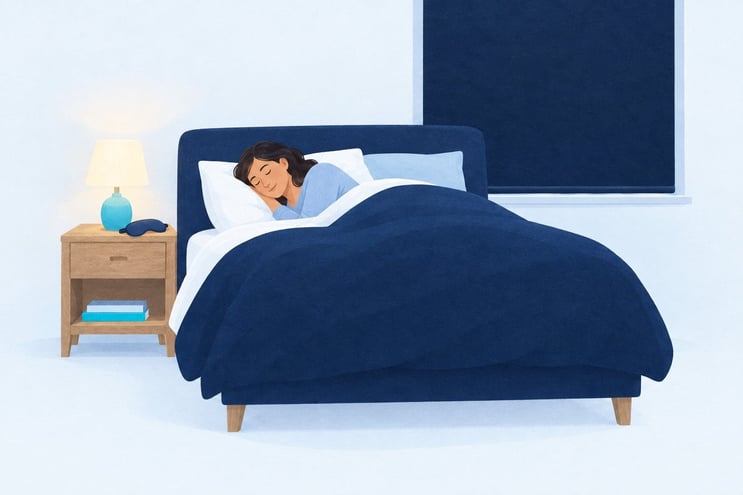 Block out light with curtains, blinds or an eye mask, and keep the room quiet.
If your partner's movement keeps waking you, or you prefer a different mattress feel, mattresses for couples is the place to compare options. I'd check whether replacement is needed before shopping: if you're unsure whether yours is past its best, use the mattress replacement checker to help you decide.
Keep caffeine and alcohol well away from bedtime
Leave at least 6 hours before bed without smoking or drinking alcohol, tea or coffee, as the NHS advises. It's understandable to want another coffee after a broken night, so pay attention to when you have your last cup.
The NHS also advises against eating a big meal late at night. Keep exercise in your daytime routine, but finish at least 4 hours before bed. With young children, finding time is awkward enough; don't put pressure on yourself to squeeze a workout into the late evening.
Protect a wind-down hour and keep a fixed wake-up time
A simple routine is enough; relaxing before bed shouldn't become another job to do perfectly. The NHS recommends these habits:
- Up at the same time every day
- Bed only when you're sleepy
- An hour to relax before bed, with a bath or a book
- Phone away and the TV off before bed: blue light makes you more awake
- No nap during the day
- No sleeping in after a bad night
The no-naps advice is for when you're past the baby months. In the early months, the NHS advice is different: rest when your baby sleeps.3
Questions people ask about sleep as a parent
Your sleep improves as your children sleep for longer, but recovery can take years. Richter's study is a guide to how common slow recovery is, not a deadline for your own. Keep working on your sleep habits; they can still help while family life remains unsettled.
In the baby months, the NHS advises resting when your baby sleeps. Once you're past that stage and struggling to sleep at night, its insomnia advice is to avoid daytime naps. Follow the advice for the stage you're in; you don't need to keep following baby sleep advice as your child grows.
See a GP if changing your habits hasn't helped, sleep trouble has lasted months, or daily life feels hard to cope with. You don't need to meet all three conditions before asking for help. Before the appointment, write down how long it's been happening and what you've already tried so you can explain the problem.