If you're getting the hours but still waking up tired, the usual suspects are stress, noise, the room, the bed and what you drink, and most of them are fixable. Nothing you can buy beats getting the everyday habits right, in my book.
Junk sleep in brief
Junk sleep means sleep that's too short or too poor to leave you rested. The NHS lists tiredness after waking as an insomnia sign. The most common causes it lists include stress, anxiety or depression, noise, a room that's too hot or cold, an uncomfortable bed, and alcohol, caffeine or nicotine. Fix your routine and room first. If you snore loudly with gasps or always feel very tired, please see your GP.
Junk sleep is sleep that's too short or too poor to do its job
Reuters reported in 2007 that The Sleep Council was warning about "junk sleep" after polling 1,000 teenagers aged 12 to 16: 30 percent slept only 4 to 7 hours, and nearly all had a phone, music system or TV in their bedroom.1 Dr Chris Idzikowski of the Edinburgh Sleep Centre described it as sleep of neither the length nor the quality the brain needs to perform properly at school. The poll concerned teenagers, though the phrase gets used for adults now.
Still feeling tired after waking is one of the NHS signs of insomnia
The NHS lists these signs of insomnia, which include how you feel during the day:
- Finding it hard to go to sleep
- Waking up several times in the night
- Waking early and not getting back to sleep
- Still feeling tired after waking up
- Feeling tired and irritable in the day
- Finding it hard to concentrate because you're tired
The NHS says adults need 7 to 9 hours of sleep on average, and you probably aren't getting enough if you're constantly tired during the day. Judge your sleep by how you feel in the day, not by the clock alone.
Stress, noise and the room top the NHS list of causes
Among the most common causes of insomnia, the NHS lists stress, anxiety or depression, noise, a room that's too hot or cold, uncomfortable beds, alcohol, caffeine or nicotine, jet lag and shift work.2 Notice where the bed sits in that list, among the room and the routine rather than above them. I wouldn't put a mattress purchase ahead of understanding what's disturbing your nights.
What sounds most like your nights?
- The room is noisy, light or the wrong temperature
- My bedtimes are all over the place
- The bed feels lumpy, saggy or uncomfortable
- I snore, or someone says I stop breathing
Make the bedroom dark, quiet and comfortable before you buy anything
The NHS self-help advice includes making sure your bedroom is dark and quiet, and that your bed, pillows included, is comfortable.
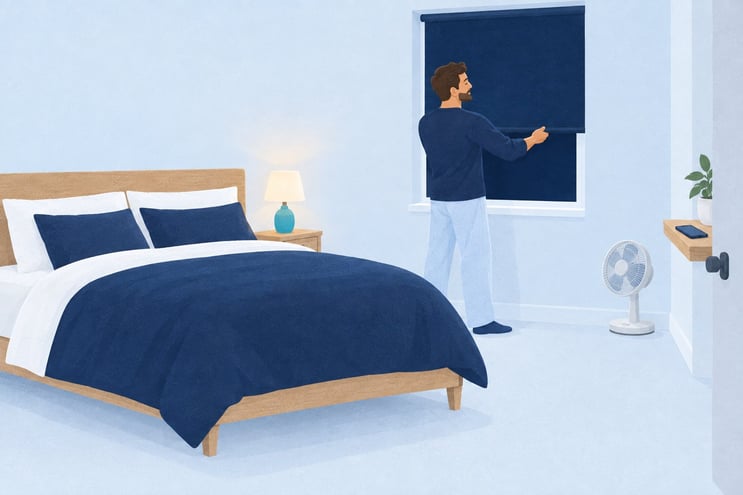 Sort the light, noise and temperature, and move the phone away from the bed, before you think about buying anything.
- the room is dark enough, with curtains or blinds that block the light
- it's quiet, or you've dealt with the noise you can
- it isn't too hot or too cold
- the bed itself is comfortable, pillows and covers included
- the phone is out of reach for the last stretch before sleep (I'm not the bedroom police, but the NHS is clear about devices)
Blackout blinds changed my world, while earplugs and masks did nothing for me.
Fix the routine before the kit
"Sleep hygiene" sounds like a telling-off about washing your sheets, but I'll happily recommend the NHS advice behind the phrase.
- Get up at the same time. Do it every day, and don't sleep in to make up for a bad night.
- Wind down for an hour. A bath or a book works, and the NHS says give it at least that long.
- Cut the late drinks. Have no alcohol, tea or coffee within six hours of going to bed.
- Skip the big late meal and the nap. Both can leave you wide awake when you want to be dropping off, and the NHS advises against both.
- Move in the day. Exercise regularly, but not within four hours of bed.
A new mattress only helps if the old one is the problem
An uncomfortable bed is on the NHS list, so check whether yours is part of the problem. I'd judge replacement by a visible dip or by waking stiff. Read our guide to how long mattresses last for help deciding. If it is the bed, our mattress quiz can narrow down your choice.
Loud snoring with gasps, or always feeling very tired, is a GP visit
The NHS says sleep apnoea can leave you very tired, struggling to concentrate, with mood swings or a headache on waking.3 At night, signs include breathing that stops and starts, gasping, snorting or choking noises, frequent waking and loud snoring. For more on snoring, read our guide to snoring.
See a GP if:
- your breathing stops and starts while you sleep
- you make gasping, snorting or choking noises while you sleep
- you always feel very tired during the day
If someone else has seen these symptoms, it can help to bring them with you to the GP. (NHS)
My own line: a month of bad sleep is a GP visit. Leave the mattress shopping.
Questions people ask about junk sleep
Why do I wake up tired after eight hours?
Eight hours in bed won't leave you rested if your sleep keeps getting interrupted. Broken nights, a noisy street or a nightcap can all spoil them, and so can stress or worry, which the NHS puts first among the common causes. If you always feel very tired, see your GP, as sleep apnoea is one possible cause.
How much sleep do I actually need?
The NHS says adults need 7 to 9 hours of sleep on average. Everyone needs different amounts, so treat the range as a guide rather than a target. Constant tiredness during the day probably means you're not getting enough. My view is that the person who genuinely needs only five hours is rarer than people like to think, and yawning through the afternoon is a fair sign you're not one of them.
Can a new mattress fix junk sleep?
A new mattress can help only if your bed is causing the problem. It sits in the middle of the NHS list of causes. Check the room and your routine before you spend money. A dip you can see, or waking stiff, points to the bed, while a noisy or hot room points somewhere else.