What our reviewers found
Introduction
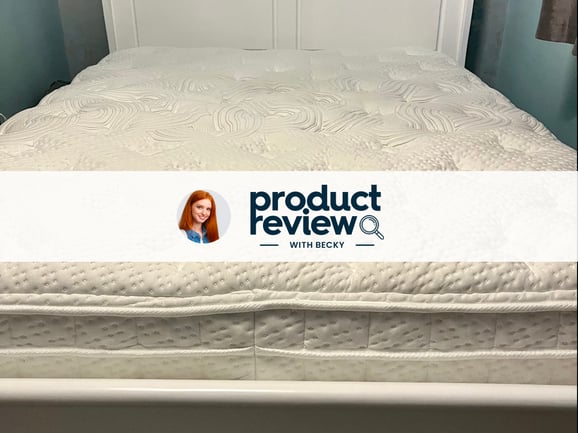
I tested the Sleepeezee Regency Knole 5600 Pocket Sprung Mattress in store at Dreams, and I’ll be upfront: it’s a very impressive, very polished mattress that I still don’t think makes much sense at full price. There’s a particular kind of luxury mattress trend at the moment - stacking spring systems on top of spring systems, adding a thick pillow top, then finishing it with a list of natural fibres that reads like a premium winter coat. This mattress is absolutely part of that upper-echelon, “look how much is inside it” category.
And yes, it feels lovely when you first lie down. Yes, it feels substantial. Yes, it has that indulgent hotel-bed vibe that makes you instinctively think, “This must be good.” But after a decade in this industry, I’ve become quite sceptical of “ridiculous spring count” messaging, especially when it’s paired with a price tag that implies the experience will be night-and-day compared to simpler, well-built mattresses. In store, it’s difficult - sometimes impossible - to genuinely feel the benefit of a few extra “carpets” of micro springs layered over a traditional support core. What you can feel, however, is the overall firmness, the deep profile, and the pillowy top. Those are real, obvious, tactile qualities. The question is whether they add up to good value. In my opinion, not right now.
That said, I can also see exactly who will love it - and if you’re in that group, and you catch a serious discount, it could become a very satisfying purchase. Let’s break it down properly.
Design and features
The Regency Knole is sold as an indulgent, natural-feel mattress with enhanced firmness and a plush pillow top, and honestly that summary is accurate. It’s a firm mattress at heart, but it’s been dressed up to feel more welcoming on first contact. When I tried it in store, the immediate sensation was “structured comfort”: you get a cushioned surface, but your body doesn’t melt in or drift out of alignment. It holds you up.
The headline materials are a blend of sustainable bamboo, certified British wool, and cashmere. On paper, that’s a premium mix - and to be fair, natural fibres can be genuinely beneficial for temperature regulation. Wool is particularly good at buffering temperature swings, and bamboo-based textiles often feel cooler and smoother to the touch. The sleep surface also includes antibacterial bamboo woven in, which is a nice hygiene angle and should help the mattress feel fresher over time, especially for people who sleep warm.
Where I start raising an eyebrow is when the luxury story leans too heavily on layered spring counts. This mattress uses thousands of individually wrapped micro and pocket springs. The marketing promise is that this cradles your body, reduces partner disturbance, and improves breathability. Some of that is fair. Pocket springs are excellent for targeted support and for isolating movement compared to old-fashioned open-coil systems. Micro springs can add a slightly more responsive “buoyant cushioning” than foam comfort layers, which some people prefer because it feels less swampy and less dead.
But here’s my in-store reality check: once you get beyond a certain point, the spring count becomes more about product positioning than user experience. A dense layer of micro springs can make a mattress feel more detailed and more “engineered,” but it also makes it deeper, heavier, and more expensive - without guaranteeing you’ll sleep better. Many customers interpret depth as luxury. I get why; it looks impressive on a bed frame and it feels like you’re buying more mattress. But “more mattress” isn’t automatically “better mattress.” I’d rather see excellent zoning, robust edge support, and well-chosen comfort materials than an arms race of spring numbers.
Edge support is one area where the Regency Knole does tick a practical box. Enhanced edge support around the border is designed to maximise the usable surface and reduce that sloping, roll-off feeling. When I sat on the side in store and shifted my weight, the perimeter felt more secure than many pillow-top models, which can sometimes feel unstable at the edges. If you like to sleep near the side, or you share a bed and want every inch of space, that matters more than people realise.
It’s also worth noting the brand credibility: Sleepeezee has held a Royal Warrant for over 60 years. That doesn’t automatically mean every model is a masterpiece, but it does indicate a long-standing reputation for quality control and consistent manufacturing standards. In the UK market, that kind of heritage tends to correlate with decent build integrity.
Still, none of this changes my core position: the Regency Knole is a premium build that leans heavily on “more layers, more springs, more depth” as a luxury signal. That’s not inherently bad. I just don’t think it’s inherently worth it.
Mattress comfort
Comfort is where this mattress becomes a bit of a contradiction in the best and worst ways. It’s marketed as enhanced firmness, and my in-store test absolutely backed that up. This is not a “medium-firm that could suit everyone” kind of mattress. It’s firm, bordering on very firm, but with a plush pillow top that smooths out the initial feel. You don’t get that immediate “hard board” sensation that some orthopaedic mattresses can have, and that’s important, because a mattress can be supportive without feeling punishing.
When I lay on my back, the mattress did what firm mattresses should do: it kept my pelvis from dropping, supported the lumbar area, and encouraged a flatter spinal line. That’s the type of support that back sleepers often describe as “relief,” particularly if they’re used to sinking too deeply into softer foams. The pillow top adds a bit of surface compliance - enough to stop the mattress feeling stark - but it doesn’t fundamentally change the tension. The core feel stays firm and stable.
On the side, my experience was less flattering, and this is where I’m going to be blunt. If you’re a dedicated side sleeper, especially if you have a curvier/hourglass shape or broader shoulders, I think this mattress is likely to feel too unyielding over time. In store, I could already feel that my shoulder and hip weren’t getting quite enough sinkage to properly distribute pressure. A pillow top can create a momentary illusion of softness, but pressure relief for side sleeping usually needs deeper compliance in the comfort and transition layers - not just a cushioned surface.
For stomach sleeping, it depends. Some stomach sleepers love a firm bed because it reduces the risk of the lower back bowing. But stomach sleeping also requires careful balance - too firm can create pressure at the chest and hips, and too soft can cause the pelvis to sink. In store, the Knole felt like it would suit some stomach sleepers, particularly those who are lighter or those who already prefer a very firm feel. If you’re heavier or you have any history of lower-back sensitivity, I’d be cautious and would strongly recommend trying it in person (as I did) rather than buying on the spec sheet alone.
Temperature-wise, the materials choice makes sense. Natural fibres like wool and cashmere can help manage moisture and temperature. Pocket springs and micro springs also create airflow pathways that foam-heavy mattresses often struggle to match. I can’t pretend I could prove cooling performance in a ten-minute in-store test, but the construction is at least pointing in the right direction: breathable fillings, spring-based support, and less reliance on thick, heat-holding foams.
One more comfort note: motion isolation. Springs can be brilliant or mediocre here depending on how they’re configured. The Regency Knole, with individually wrapped springs, should reduce partner disturbance compared to older systems, and that matches the general behaviour of pocket sprung builds. In store, I did the usual quick checks - shifting position, sitting and standing at the side, moving my weight across the surface - and it felt stable. It didn’t have that trampoline-like rebound you get from cheaper spring units. But motion isolation is something I’m always careful about claiming too strongly without a home trial, because real life includes turning over at 3am, different body weights, and months of use.
Overall, the comfort is high if you want firm support with a more forgiving surface. If you want deep pressure relief, cradling, or a softer, more contouring sensation, this isn’t the one.
Suitability
This is where I feel most confident giving a strong opinion, because the firmness level dictates suitability quite clearly. If you’re shopping for the Regency Knole, you need to want firm. Not “I guess I could tolerate firm.” You need to actively prefer it.
In my view, the ideal buyer looks like this: a back sleeper who wants a stable, orthopaedic-style support feel, but who doesn’t want to sleep on something that feels bare or harsh. The pillow top is essentially there to take the edge off the firmness, making it feel more inviting while still keeping your posture in check. If you sleep flat on your back and you often wake up feeling your lower back is unsupported on softer mattresses, the Knole’s tension could feel like a revelation.
It will also suit some stomach sleepers, especially those who already know they get on with a firmer surface. The mattress’s resistance should help keep the hips from dropping too far, which is a common cause of morning back ache for front sleepers. That said, stomach sleeping is one of those positions where “firm” isn’t always the answer - sometimes “supportive but not rigid” is better. So I’d put stomach sleepers in the “try before you buy” category, and make sure you spend a good few minutes on it in your usual posture.
Side sleepers are where I’d draw a fairly hard line. If you’re a pure side sleeper, I wouldn’t recommend this mattress as a first choice. The risk is pressure build-up at the shoulder and hip, plus a potential gap at the waist that can leave you feeling like you’re not properly supported in the middle. If you’re an occasional side sleeper but mostly on your back, you might cope. If you’re petite and don’t have prominent shoulders/hips, you might cope. But if you’re curvy, if you have existing shoulder sensitivity, or if you value that “hug” and pressure relief feeling, I think you’ll be fighting the mattress rather than relaxing into it.
For couples, the edge support and the pocket spring format are positives. The border feels more useable than many pillow-top designs, and the structure should help with movement transfer. But again, I’m not going to oversell what I couldn’t fully validate without taking it home. My testing was in-store and in-person, not a multi-week trial in a real bedroom environment.
Finally, a note on value-based suitability: this is a mattress for people who like premium materials and a premium story, and who don’t mind paying for it. If you’re looking for the best sleep per pound spent, I don’t think the Regency Knole is a smart buy at full price. If you’re the kind of shopper who only buys when discounts hit and you’re comfortable waiting for the right deal, it becomes far more appealing.
Best for: back sleepers who want very firm, orthopaedic-style support with a plush top feel.
Also suits: some stomach sleepers who prefer firm tension.
Avoid if: you’re primarily a side sleeper, especially with an hourglass figure or pressure-point sensitivity.
Value seekers: wait for a significant discount; I don’t rate it as good value at full price.
What customers thought
The customer feedback I’ve seen on the Regency Knole is very consistent with what I felt in store, and it’s also a good example of how a mattress can be “excellent” for one person and completely wrong for another.
One review described it as giving “incredible orthopaedic support without feeling hard or uncomfortable,” and that wording really rings true. That’s exactly the impression the pillow top creates: it softens the greeting, so the firmness doesn’t feel brutal. For the right sleeper - particularly someone with back discomfort who has been stuck on a sagging medium - this kind of mattress can feel like proper correction. It holds you in a more neutral posture, which can reduce the sensation of strain.
The same review praised the “very firm tension” for aching joints, which is a common response when joint pain is aggravated by instability rather than pressure. People often assume aches require softness, but many aches are worsened by poor alignment and excess sink. A firm, supportive structure can help in those scenarios, and the Regency Knole is absolutely built to prioritise stability.
The materials also stood out in feedback: “cashmere, British wool, and naturally cooling bamboo gives a premium feel.” I agree with the “premium feel” part. Whether it’s premium performance is more debatable. Natural fibres can absolutely help with temperature regulation and moisture management, but they’re also used as luxury signals. If you’re someone who sleeps hot and you’re comparing this against a dense all-foam mattress, then yes, the spring-and-fibre build could be a meaningful upgrade. If you already sleep fairly neutral, the difference may be subtle.
Customers also called out the “triple-layer spring system” as stable and breathable, and said the “deep, cosy pillow top adds just the right amount of comfort.” Again, this matches the in-store feel: the surface is cosy, the core is firm, and the overall sensation is stable rather than sinky.
Where I think customer reviews need context is this: people often leave feedback soon after purchase, when the mattress is at its freshest and most visually impressive. A deep pillow top looks and feels indulgent early on. The true test is how that comfort holds up over months and years, and how the firmness interacts with your preferred sleep position long term. A side sleeper can sometimes tolerate firmness for a few nights and then slowly start waking with shoulder tightness. A back sleeper can fall in love immediately and still love it years later. So when you read glowing feedback, try to match it to your body type and sleep style, not just the star rating.
In other words, I don’t doubt these positive experiences at all - I just think the mattress is a specialist choice masquerading as a general luxury buy. If you’re the right type of sleeper, the praise makes perfect sense. If you’re not, the same features will become the reason you return it.
The verdict
The Sleepeezee Regency Knole 5600 is a mattress I respect more than I recommend - at least at full price.
Here’s what I genuinely like about it, based on my in-store testing. It feels exceptionally well put together. It has that reassuring, premium density and finish that cheaper beds simply don’t replicate. The edge support is stronger than I expected for a plush-topped design, and the overall experience is stable, supportive, and properly “grown-up.” The natural fibre blend is a sensible choice for breathability and year-round comfort, and the pillow top does a good job of making a firm mattress feel inviting.
Now for what I don’t like. The big selling point - those towering spring counts and multiple spring layers - feels like classic luxury mattress theatre. It makes the mattress deeper and more impressive to look at, and it gives customers that “I’m buying something substantial” satisfaction. But in terms of what you can actually feel in store, the difference between this and other well-built, lower-spring-count firm pocket sprung mattresses is not remotely as dramatic as the marketing suggests. At some point, spring count becomes a brag, not a benefit. I’m wary of paying a premium for that.
And value matters. A mattress can be lovely and still be poor value. That’s where I land with the Regency Knole today. If a massive discount crops up, then yes - go for it, especially if you’re a committed back sleeper who wants firm orthopaedic-style support without a harsh surface feel. But if you’re paying full whack because the numbers sound impressive, I’d advise you to pause. There are firm mattresses with excellent support, strong edge reinforcement, and breathable builds that cost less and deliver a very similar night-to-night experience.
My strongest advice is also the simplest: only buy this mattress if you have tried it in person (as I did) and you already know you like a firm tension. If you’re a side sleeper trying to “train yourself” to like firm, I think you’re likely to regret it. If you’re a back sleeper who wants your spine held in place and you like a mattress that feels steady and substantial, it could be a brilliant match - just don’t overpay for spring-count hype.
If you’re a back sleeper and want firm-with-a-plush-top: strong contender, particularly on offer.
If you’re a side sleeper: I’d avoid; it’s too firm for reliable pressure relief.
If you’re shopping with value in mind: wait for discounts or consider simpler firm pocket-sprung options.
If you want “luxury you can feel,” not “luxury you can count”: focus on tension, comfort layers, and edge support over spring numbers.
Why you can trust WantMattress
We spend hours testing (and/or researching) every product or service we review, so you can be sure you’re buying the best. Find out more about
how we test .
Published: 29 March 2026
Tested by
Becky Reeve , Editorial Director, Mattress Expert