What our sleep experts found
The Shire Phoenix Memory Mattress in a Box is pitched as a supportive, comfortable all rounder with a touch of memory foam and a traditional spring core. I’ve been looking forward to getting this one on the site because it’s exactly the sort of ‘simple hybrid’ people end up buying when they want a bit of memory foam without spending a fortune. I did manage to get hands on with one briefly (not a full night’s sleep, but enough to poke, press, and have a quick lie down), so this isn’t just a spec sheet rewrite. Archers is in Scotland, so I haven’t done a proper in-store session there, and it hasn’t been trialled in my own home either. So take this as a real-world first impression backed up by the published specs, with a bit of healthy scepticism where it matters.
Design and features
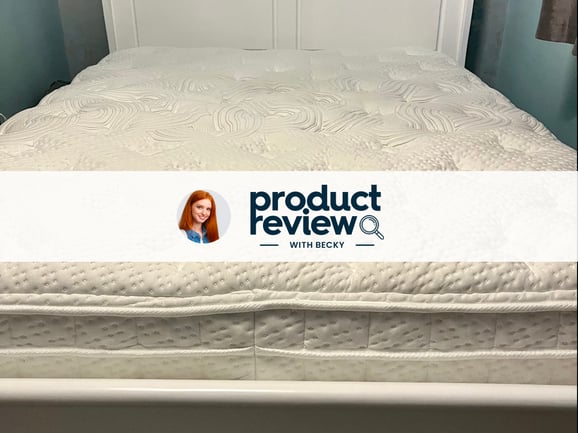
On paper, the Phoenix is a straightforward hybrid of sorts. You get an open coil spring unit, a knitted stretch cover, and a 10mm memory foam layer sitting just under that top fabric. Running my hand across the cover, it felt soft and fairly forgiving, and the stretch knit does what you want it to do, it doesn’t feel like it’s fighting the foam underneath. The mattress is also hand tufted, which I generally like on traditional builds because it helps stop fillings migrating and turning lumpy over time, at least in theory.
When I pressed down with my palm and then my elbow (a quick way to see how ‘deep’ the comfort is), you can feel the memory foam give a little, but you hit the spring response pretty quickly. That’s not a bad thing, but it does mean the ‘memory’ part is more of a topping than the main event. Also worth saying, open coil tends to transfer movement more than pocket springs, so if you share the bed and one of you is a fidget, you’re more likely to notice it here.
But I’m going to be honest about my bias here. I don’t like open coil support layers. They are the budget end of sprung support and they can feel less precise, especially if you are sensitive to pressure points or you share the bed. I’d rather a manufacturer shaved a little off the margin and used a better support core like reflex foam or a pocket spring unit. Open coil can still be fine, but it is rarely my first pick when comfort and long term consistency are the goal.
Mattress comfort
The comfort here will largely come from that 10mm memory foam and the soft knitted cover. Ten millimetres is not much, so don’t buy this expecting a deep, sinking memory foam feel. It is more of a light contouring layer that should take the edge off the springs, smooth out the surface, and add a bit of pressure relief at the shoulder and hip.
On my side, I could feel a bit of give at the shoulder, but it wasn’t that slow-melting, ‘hug’ sensation you get from thicker memory foam. On my back, it felt more like a traditional spring mattress with a slightly plusher top, which some people will actually prefer because it’s easier to move around on. The flip side is that if you’re buying this because you want memory foam to do the heavy lifting for pressure relief, this layer is simply too thin to mask a springy core in the way a deeper comfort stack can.
Where I get a little cautious is how that thin foam interacts with an open coil beneath it. If the spring unit has any bounce or unevenness, a small foam layer can only disguise so much. It can still feel comfortable at first, but it may not deliver the calm, stable sensation that many people want from memory foam. And if you’re a light side sleeper, say under about 70kg, medium tension on an open coil can still feel a bit ‘up on top’ around the shoulder because you’re not sinking far enough into the comfort layer. Still, at a basic comfort level, I can see why a customer might simply say it is a wonderful mattress. If you are upgrading from a tired old spring bed, this could feel like a big improvement quickly.
Suitability
This medium tension is broadly good for both back and side sleepers, and in my view it does a better job for side sleepers. Average weight sleepers should find it reasonably easy to settle, and the surface should feel soft enough to reduce pressure without being overly squishy. Back sleepers can make it work in a pinch, but if you are prone to lower back niggles, I would personally look slightly firmer and ideally with a more supportive core. The open coil design is the sticking point for me, because it is not as targeted as pocket springs, and not as uniformly supportive as a good reflex foam base.
The verdict
I see the Shire Phoenix as a decent, no fuss medium feel mattress that will suit a lot of side sleepers who want a softer top and simple set up delivery. But I’m not going to pretend I’m excited by the open coil interior. For the money, I’d also like to see a bit more memory foam than 10mm, because that’s the headline material and it’s doing a fairly small job here. If you are choosing purely on price and you want a touch of memory foam without going fully foam, it could be a sensible buy. If you want sharper support, better partner stability, and a more premium feel over time, I would personally shy away and spend a bit more on a pocket sprung or quality foam alternative. For me, the Phoenix is okay, just not the kind of build I’d actively recommend when better options without open coil exist.
Why you can trust WantMattress
We spend hours testing (and/or researching) every product or service we review, so you can be sure you’re buying the best. Find out more about
how we test .
Published: 7 November 2025 · Updated: 15 March 2026
Peer reviewed by
Becky Reeve , Editorial Director, Mattress Expert