Why our sleep experts loved it
The Sleepeezee Memory Sense 2300 is one of Furniture Village’s in-house pocket spring and graphite-infused memory foam hybrids, positioned clearly in the premium camp at around the £1,000 mark for a double in the current sale. I sampled it in store and was impressed by how readily it supported me in my side position, with a genuinely medium feel and a thickly padded, cushioned top free from the mud-in-the-middle sensation I often find with high-density memory foam.
The area that surprised me most, however, was temperature regulation. I have to say the Memory Sense 2300 kept me much cooler for a memory foam bed. Graphite (alongside the all-the-rage graphene-style cooling claims) in the comfort layer seems to be working well at distributing heat, at least over the course of a typical showroom night simulation. Factor in that 2,300 pocket springs in the king size, a 29 cm depth and the overall profile and this is, on paper and in the flesh, a well-specified mattress. My only real reservation is over value. At full price there are a few competitive rivals around the £1,000 price point that I think edge it slightly on either refinement or extra cooling tech. On a good discount, however, the Memory Sense 2300 becomes a much more compelling proposition.
Construction & materials
A UK-made hybrid, the Sleepeezee Memory Sense 2300 mattress builds around a solid pocket spring core and modern, heat-dispersing memory foam comfort layer. It’s an exclusive for Furniture Village, which also partly explains its positioning as a premium product.
Support core: 2300 individually pocketed springs sit in the heart of the Sleepeezee Memory Sense 2300, which in king size terms is 2,300 springs in total. Each pocketed spring is contained in its own fabric pocket, allowing them to move independently and respond to the shape and weight of your body. The pocket spring count is very respectable for this price point and in use this translates into a nicely responsive supportive feel that lacks excessive bounce.
Comfort layer: Graphite-infused memory foam caps the spring unit. This memory foam layer is designed to contour to the shape of your body, spreading your weight across a broader area and relieving pressure in high-stress zones around the shoulders and hips. Graphite particles are added to help disperse heat away from the body, so you get that classic cradling hug without the overheat factor of standard visco foam in quite the same way.
Edge support: The pocket spring unit is encapsulated in a holding fabric, so the mattress gives you edge-to-edge support rather than a looser perimeter. Sitting or lying right up against the side in store I felt only a small amount of compression and didn’t get the feeling that I might roll off the bed. This is reassuring for couples who share a bed and need to use the full width of the mattress.
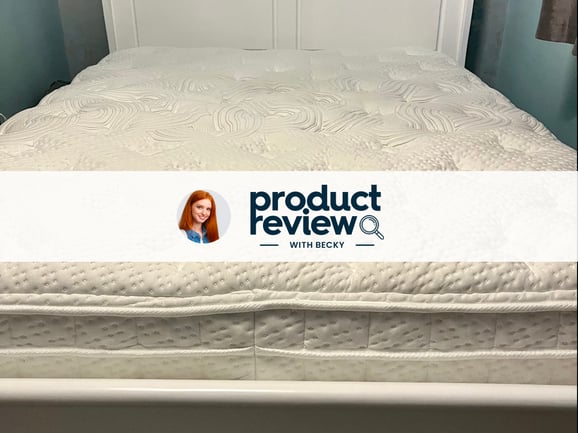
Cover and border: The cover is Sleepeezee’s branded Oxysense fabric, which the company says increases oxygen levels in the blood, promotes muscle recovery and helps you to sink into a deeper sleep. I can’t personally comment on the more extravagant health claims, but the fabric itself feels soft, smooth and breathable to the touch. The border is polyester encapsulated, giving a nice, upholstered finish that also helps keep the structure firmer around the edges. Handles are also sewn in to make mattress rotation easier.
Overall build: At 29 cm deep, the Memory Sense 2300 is a substantial mattress that feels weighty and solid in person. It is non-turn so you only sleep on one side. This is why the comfort layers are focused on the top of the mattress. The flip side is finished for stability, not comfort. Like many higher-end pocket sprung mattresses, the weights increase quite dramatically with size, so you will probably need two people to manoeuvre this one, especially the king and super king.
Firmness & feel
Medium-rated, and the Memory Sense 2300 delivered that when I tried it in the shop. In my side-sleeping position, I got a gently cushioned sink through the graphite memory foam, particularly around my shoulders. But the pocket spring unit underneath supported me in a neutral position without sagging.
On my back, I felt well balanced, with the springs supporting me evenly across the length of my spine and the foam adding a comfortable, slightly cocooning top feel. I didn’t detect a hard transition between layers, which can sometimes happen in cheaper hybrid models where the foam layer is too thin. Instead, the comfort layer here is thick enough to deliver that slow, pressure-relieving response that people want from memory foam.
Compared to a very firm orthopaedic model this will feel substantially plusher and more embracing. Compared to an extremely soft pillow-top though, it is much more controlled and supportive. For most average-weight side and combination sleepers, I would describe this as a genuinely comfortable medium: soft enough for pressure relief, but with enough underlying support to avoid feeling swamped.
Heavier sleepers may find the overall feel nudges towards medium-soft with time, simply because you will compress deeper into the spring unit. Very light sleepers, particularly those who sleep on their back or front, may feel it as slightly firmer because they won’t sink as deeply into the memory foam layer.
Performance & support
Pressure relief: The Sleepeezee Memory Sense 2300 delivers the goods here. When I lay on my side my shoulder and hip were cradled nicely, and I didn’t get the familiar ‘hot spot’ feeling I can get on firmer, more traditional pocket-sprung mattresses. The graphite-infused memory foam moulds closely without swallowing you whole, so you retain some ability to move and change position during the night.
Spinal alignment: In a natural side-sleeping position my spine was straight and well supported, with my shoulder able to dip in just enough. Lying on my back, my lower back stayed in contact with the mattress, rather than arching away. This is key if you suffer from general back ache and are looking for a mattress that offers a happy medium between softness and good support.
Motion isolation: Pocket springs are already good at limiting motion transfer, but the layer of memory foam on top damps down movement still further. In practice, this should mean that partner disturbance is relatively low, especially when compared to an open coil or more bouncy traditional spring mattress. If one of you is particularly restless, this is a decent choice for minimising night-time ripple effects.
Edge-to-edge use: The encapsulated edge means I felt able to use the full width of the mattress without fear of rolling off the end. Sitting right on the side does compress it, of course, but in use lying close to the side felt stable and supported. This is especially useful if you’re looking at a double rather than a king and still need every centimetre of space.
Temperature regulation
Memory foam mattresses can have a reputation for sleeping hot. For that reason, I was particularly interested in how the graphite-infused layer on the Memory Sense 2300 performed. Lying on it in the shop I was actually surprised by how comfortable it was. I tend to notice heat build-up quite quickly when lying on standard foam mattresses but here I felt reasonably cool for the time I spent on it.
Graphite particles are intended to draw heat away from the body and help spread it through the layer so that it can dissipate more easily. Combined with the breathable pocket spring core and the relatively airy Sleepeezee-branded cover, the upshot is a mattress that offers that cosy, hug of memory foam, but with less of the hot, swamped feeling that older, denser foam layers can generate.
That said, if you are a very hot sleeper who favours the breeziest possible mattress, a more traditional pocket-sprung model with natural fibre comfort layers (think wool or cotton) will likely run cooler overall. The Memory Sense 2300 finds a sensible middle ground: better than many pure foam beds, but still with a more gently cocooning surface feel rather than a crisp, airy one.
Practical features
No-turn design: Single-sided so there’s no need to flip it over. This is great news given its weight. The company still recommends you rotate it, head to toe, periodically to help the fillings settle. The built-in handles make this easier, but you will still want two people helping for the larger sizes.
Hypoallergenic: The fillings are described as hypoallergenic. For anyone who suffers with dust allergies, this will be a plus as you won’t be looking at a mattress packed with loose, natural fibres. As ever I would still recommend adding a quality mattress protector on top for hygiene and also to help preserve the cover over the long term.
Compatibility: This, like most pocket sprung mattresses, can be used on a divan base or a slatted frame. However, there is a very clear guideline here: any slats must be no more than 7.5 cm apart. Wider gaps risk the springs dipping between the slats and could potentially invalidate your guarantee, so it’s worth checking existing bed frames if you are upgrading.
Guarantee: Sleepeezee offer a 20-year structural guarantee on the Memory Sense 2300 mattress. It’s a marketing-speak term, of course, because the reality is no mattress will feel brand new two decades on. But a long guarantee is always reassuring on something like this and certainly suggests some confidence on the part of Furniture Village in build quality and structural integrity, as long as you follow the care instructions.
Delivery & lead time: The quoted delivery lead time for the Memory Sense 2300 is around 21 days for most UK mainland addresses, with an additional week or two on top if you are further from the distribution centres. That’s not unusual for a made-to-order mattress, but it does feel on the slow side when compared to box bed brands, for example, that can ship within days. If you need a bed urgently, I think the lead time on this one is going to be frustrating.
Delivery cost: All furniture from Furniture Village has a dedicated delivery charge, and delivery for mattresses includes getting it into your room of choice. That’s a very practical plus given the weight of this mattress, although it is another cost to factor in at the overall price stage.
Who it suits
Side sleepers and combination sleepers: I think this is where the Sleepeezee Memory Sense 2300 really shines. The medium tension, generous depth and graphite-infused memory foam combine to provide great pressure relief around the shoulders and hips, while still maintaining good spinal alignment. If you are a combination sleeper and switch between your back and side, this more neutral feel should also work well for you.
Couples who value low partner disturbance: The combo of pocket springs and memory foam in this mattress is ideal if one or both of you toss and turn a lot at night. Movement is well damped and will not bounce across the mattress.
Those who like memory foam but worry about heat: If you enjoy the gentle hug of foam but have found older models too hot, this is a great compromise. The graphite-infused layer and pocket spring core improve airflow enough that you get a more temperature-controlled version of that classic memory foam comfort.
Anyone wanting a premium-feeling mattress with a reassuring guarantee: The build quality is solid in person and the 20-year structural guarantee is a genuine bonus for those looking to invest around the £1,000 mark in a new mattress.
Who it does not suit
Very hot sleepers: Cooler than many standard foam-topped mattresses but it is still a memory foam hybrid. If you are extremely heat-sensitive and prefer the driest, most breathable sleep surface, then a more traditional pocket-sprung mattress with natural fibre comfort layers or a latex hybrid is a better bet.
People who prefer very firm or very soft beds: The Memory Sense 2300 is a true medium. If you love the feel of a very firm orthopaedic mattress or a very plush, pillow-topped hotel-style bed, then this is going to annoy you because it sits squarely in the middle.
Stomach sleepers and heavier users seeking extra-firm support: Some stomach sleepers, particularly at higher weight brackets, may find the mattress too forgiving across the hips. This is a medium-rated mattress, so some in this group might be better served by a firmer or ortho-rated model that will help keep the hips lifted.
Shoppers on a tight budget: Even when on sale this is a relatively premium option. If your budget comfortably comes in below the £1,000 mark, then there are decent hybrid mattresses out there at lower price points, albeit with lower spring counts or less techy cooling features.
Anyone needing a mattress in a hurry: With an estimated lead time of 21 days, plus potential extra time depending on location, this is not the mattress to go for if you need something by next week or are replacing a bed at short notice.
Final verdict
I spent a good amount of time lying on the Sleepeezee Memory Sense 2300 mattress when I visited the store, and I have to say I was impressed by how readily it combined contouring memory foam with genuinely supportive pocket springs. Medium tension is spot on for side sleepers, with excellent pressure relief and spinal alignment. The graphite-infused foam does a good job of keeping things reasonably cool compared to many foam-heavy beds, and the 2300 pocket spring core delivers stable edge support and low partner disturbance.
It’s the area of value where I hesitate a little because, yes, the specification, the build quality and the long structural guarantee absolutely justify this as a premium product. But the truth is that at full price there are other mattresses out there around the £1,000 mark that edge it slightly on either refinement or more advanced cooling tech. At the typical sale price, though, the Memory Sense 2300 becomes easy to recommend if the specific blend of medium support and cooler memory foam do appeal to you.
If you are a side or combination sleeper looking for a modern hybrid that feels supportive and substantial, but also pleasantly cocooning without being stifling and you are happy to work with a roughly three-week lead time, then the Sleepeezee Memory Sense 2300 is well worth shortlisting, particularly if you can catch it discounted. If you never or rarely see it reduced and you are working with a strict £1,000 budget, though, I would advise keeping an open mind and comparing this with a couple of other similarly-priced options before committing.
Why you can trust WantMattress
We spend hours testing (and/or researching) every product or service we review, so you can be sure you’re buying the best. Find out more about
how we test .