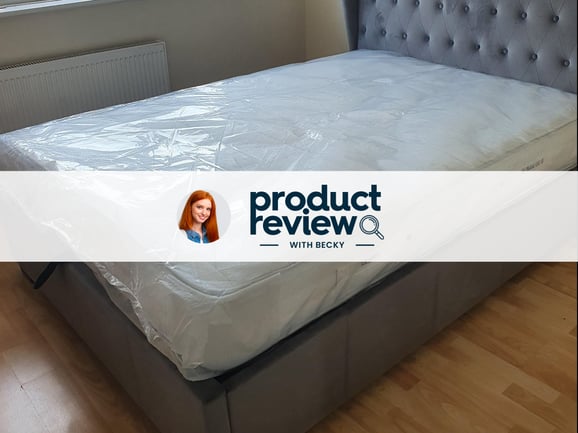
Why our sleep experts loved it
The Alpha Theta Premium Pillow Top Mattress is trying to be that “best of both worlds” option: a medium-feel mattress with a tall, hotel-style profile, a plush pillow top, and enough structure underneath to keep most sleepers supported. I tested it in store (in person, on the bed base it was displayed on), and I’ll be upfront: it makes a strong first impression visually and initially feels inviting, but the deeper you look into what you’re paying for, the harder it is to recommend at full price.
This is one of those mattresses that’s absolutely not terrible,there are far worse builds on the market, but it is, in my view, slightly over-positioned as “premium” considering the spring count and the choice of comfort materials. If you spot it on a meaningful sale, it becomes much more tempting. At its typical pricing, I’d personally keep shopping.
Design and features
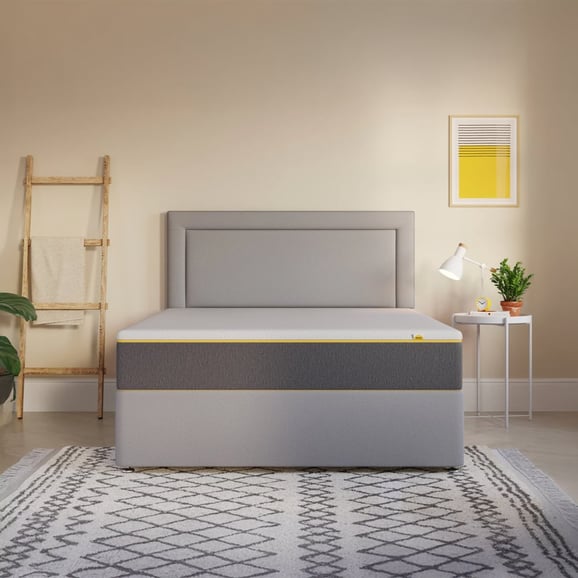
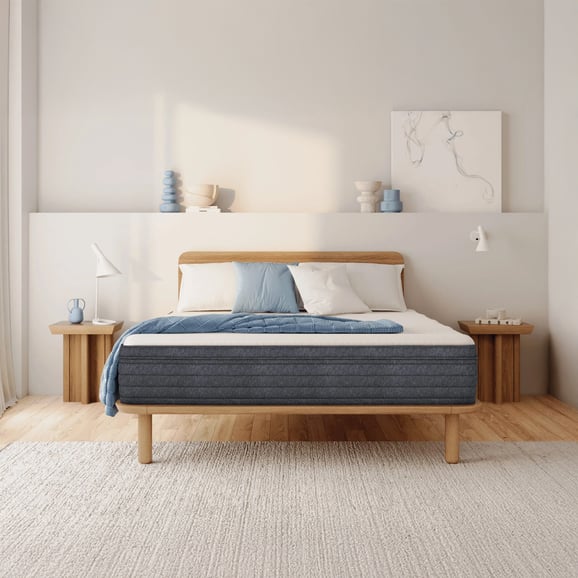
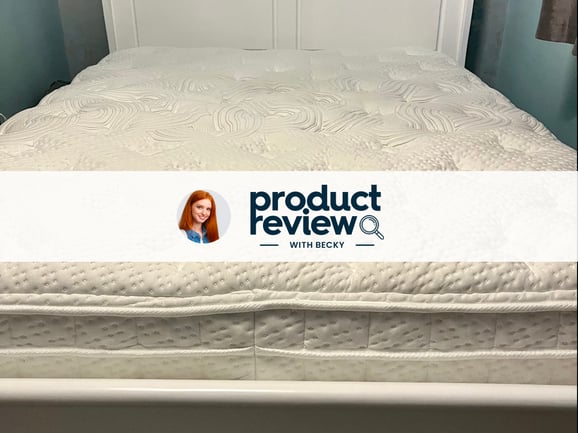
On the showroom floor, the Alpha Theta Premium Pillow Top looks the part. At 30cm deep, it has that substantial, layered silhouette people associate with a higher-end mattress, and the pillow-top finish gives it immediate “try me” appeal. The cover is soft-touch knitted, and the overall presentation is clean and modern, exactly the sort of bed that sells itself in the first 10 seconds, especially if you’re upgrading from an older open-coil or a budget foam mattress.
Under the covers, the headline support system is a core of 650 pocket springs. Pocket springs are a strong choice in principle: each spring responds independently, so the mattress can adapt to different pressure points rather than behaving like one bouncy unit. In store, I could feel that independent response when shifting from back to side,there is a noticeable “give” at the shoulder and hip, which is what you want from a pocketed unit.
That said, I’m going to be blunt: 650 pocket springs is not an especially high count for something positioned as a premium pillow top. Spring count isn’t everything (wire gauge, spring height, and the comfort layers matter hugely), but at this price tier, I expect either more springs, a more sophisticated zoning story, or a clearly superior comfort stack. Here, you’re mainly paying for height and surface plushness rather than a genuinely elevated spring system.
Above the springs, the comfort build leans heavily on polyester fibres and reflex foam. The description calls out thermobond polyester fibres, soft white fibres, super soft foam, high density soft foam, and two layers of reflex foam. That is a lot of layers on paper, but the materials are doing a very specific job: creating a buoyant, cushioned feel rather than a slow-melting, body-hugging memory foam experience.
And this is where I want to set expectations properly. If you are shopping for that classic “sink in, get gently held, feel the mattress mould around you” sensation,particularly what people associate with memory foam,this mattress is likely to disappoint. Reflex foam is springier and more responsive. It pushes back. It doesn’t cradle in the same way. Some people love that because it’s easier to move on and it feels more supportive at first touch, but others interpret it as less luxurious because you don’t get that signature contour.
The edge support is a definite plus. It uses foam encapsulation around the border, and in store I specifically sat on the side and also lay close to the edge to see whether it collapsed. It held up better than many pillow-top builds, which often feel unstable around the perimeter. For couples who use the full width of the bed, or anyone who sits on the edge to put socks on in the morning, this is one of the stronger features of the Alpha Theta.
Practicalities are sensible too. It arrives rolled, which makes access easier in UK homes with narrow staircases and tight landings, and it’s single-sided, so you’re not expected to flip a 30cm deep mattress. You should rotate it top-to-toe seasonally to even out wear, and I would strongly recommend doing that,especially with a pillow top,because surface layers can compress over time where you sleep most.
It also conforms to BS7177: 2008 for domestic use, and it comes with a 10-year warranty, which is reassuring on paper. Warranties aren’t the same thing as comfort guarantees, though, and they rarely cover normal softening. In other words: it’s a good warranty to have, but it shouldn’t be the main reason you buy it.
30cm depth gives it a substantial, premium-looking profile
650 pocket springs offer decent independent support, but it’s not a standout count for the category
Comfort layers are largely reflex foam and fibre-based, not memory foam
Foam-encapsulated edge support is genuinely strong in store testing
Rolled delivery and single-sided upkeep are practical for most homes
10-year warranty and domestic fire compliance are reassuring baseline features
Mattress comfort
Comfort is where this mattress becomes a bit of a “know what you’re buying” situation. When I first lay down on it in store, the pillow top did its job: you get an immediate softness at the surface that makes the mattress feel welcoming. It’s the type of plush top that gives you that “ahh” moment when you first lie down,particularly if you’re used to firmer, flatter mattresses.
But after spending a proper amount of time changing positions, I’d describe the comfort as plush-on-top but buoyant underneath. The pillow top gives a cushiony first contact, then you fairly quickly meet the supportive layers and the spring unit. That’s not inherently bad,many sleepers prefer not to feel swallowed by a mattress,but it does mean the “pillow top” name can lead some shoppers to expect a softer, more enveloping experience than they’ll actually get.
The medium rating is broadly accurate, but it’s a particular kind of medium. It’s not that slow, dense medium you get with a thicker memory foam comfort layer. It’s more of a balanced, slightly spring-forward medium with a softened surface. In my opinion, this style suits people who want comfort without feeling stuck, and who like a mattress that responds quickly when you move.
Pressure relief was decent for side sleeping during my in-store test, especially at the shoulder. The mattress allowed enough give that my shoulder didn’t feel “jammed” upward. The hip also settled comfortably, though I wouldn’t call it a deep contour. If you’re a strict side sleeper who needs pronounced pressure relief (particularly if you have shoulder sensitivity), a memory foam or latex comfort layer often does that job more convincingly. The Alpha Theta gets you partway there, but it doesn’t deliver that immersive cushioning that true pressure-relieving foams can provide.
On my back, the support felt fine initially, but here’s where I’m sceptical for some body types. Because the upper comfort is plush and the build includes a lot of fibre and softer foams, some back sleepers,especially those who are heavier or who have a pronounced lower back curve,may find they’d benefit from a slightly firmer option to keep the lumbar area consistently supported all night. In store, you can’t replicate 7-8 hours of sleeping, of course, but you can get a sense of whether your hips sink more than you’d like. With this mattress, there’s a real chance that some back sleepers will feel “almost supported enough” rather than completely held in that neutral posture.
Motion isolation should be reasonably good thanks to the pocket springs and the foam layers, though I want to be careful not to overpromise since I didn’t sleep on it at home with a partner. In store, when I shifted my weight and rolled, the mattress didn’t feel overly bouncy, and the pillow top plus foams dampen movement. It’s not the deadened, ultra-still feel of a thick memory foam slab, but it should be better than traditional open-coil mattresses and many cheaper pocket-spring models with thinner comfort layers.
Temperature-wise, the materials here are not obviously “cooling technology” focused. Reflex foam tends to be less heat-hugging than traditional memory foam, which can be a plus for warm sleepers, but thick pillow tops and fibre layers can still hold warmth. I’d call it fairly neutral based on the materials, but if you’re someone who runs hot, I’d still recommend using breathable bedding and a decent mattress protector rather than anything overly waterproof and plasticky.
One more thing I want to highlight: “soft white fibres” and big fibre builds can be a weak point long term. Fibres compress. They can be excellent for initial loft and surface plushness, but they’re not always the most resilient at maintaining that just-like-new pillow-top feel. This is exactly why I think rotation is non-negotiable with this mattress. If you’re the type of person who never rotates a mattress, a pillow-top fibre-heavy design is a risky choice, regardless of brand.
Immediate surface plushness feels inviting on first lie-down
Overall comfort is buoyant and responsive rather than “sinking” and cradling
Side sleeping pressure relief is good, but not as contouring as memory foam-heavy builds
Back sleeping feels broadly supportive, but some may want firmer for stronger lumbar stability
Edge support is strong and makes the usable sleep surface feel larger
Fibre layers can compress over time,rotation is especially important here
Suitability
If I were matching this mattress to the right person, I’d start with sleeping position and what you expect a pillow top to feel like.
The medium tension is a solid “middle ground” for couples, and I do agree that it generally works for both back and side sleepers,however, it does a better job for side sleepers overall. In store, the shoulder comfort stood out as one of the more convincing parts of the feel, and the mattress had enough surface give to reduce that sharp pressure feeling that firmer mattresses can cause.
Average-weight sleepers should be able to find comfortable support across positions, especially combination sleepers who start on their side and end up on their back, or vice versa. The mattress transitions between positions easily because the foams are responsive and you’re not fighting a slow-moving memory foam layer.
For dedicated back sleepers who already know they prefer a more “on top” feel, I’d be cautious. The pillow top and fibre/foam stack can make the top feel softer than some back sleepers enjoy, and if you’re buying primarily to improve lower back comfort, I’d encourage you to compare it directly with a slightly firmer pocket-spring model or a zoned spring option. In my experience, a true back-sleeper mattress needs to feel supportive not just when you first lie down, but when you relax fully and your pelvis settles,this is where medium pillow tops can sometimes feel a touch too forgiving.
For stomach sleepers, I’m even more sceptical. Medium pillow tops are often not ideal for front sleeping because you typically need firmer, flatter support to prevent the hips dipping and the spine over-arching. A small amount of plushness is fine, but the Alpha Theta is designed to feel cushioned, and that cushioning can become the enemy of alignment for stomach sleepers.
For heavier sleepers, the question is whether 650 pocket springs plus this comfort build will hold posture consistently. It might, but at this price point, I’d rather see a beefier spring count or a firmer, more supportive comfort approach for long-term resilience. I don’t think it’s the best-value choice for higher body weights if you’re paying full price.
For people with joint sensitivity (shoulders/hips), it can work if you like a slightly buoyant cushion rather than a deep contour. If you’ve tried memory foam before and loved that hugged feeling, I don’t think reflex foam is going to scratch the same itch.
Best for: side sleepers, combination sleepers, and couples wanting a middle-of-the-road feel
Good for: average-weight sleepers who like responsive cushioning rather than deep sink
Be cautious if: you’re a strict back sleeper wanting firmer lumbar stability
Not ideal for: stomach sleepers, or anyone who needs a very firm, flat surface
Consider alternatives if: you specifically want memory foam “hug” and slow-moulding comfort
What customers thought
Many buyers will initially describe this type of pillow-top as “luxurious” or “hotel-like” because the surface feels plush and the mattress looks tall and expensive. That’s a real strength of the Alpha Theta: the first impression is strong, and for plenty of people, that’s exactly what they want when they upgrade.
Second, responsive foam over pocket springs often gets described as “supportive but comfortable.” People who dislike memory foam (or who feel it sleeps warm, or makes them feel stuck) frequently prefer reflex-style comfort layers because it’s easier to roll over and it feels more traditional in support.
Third, and this is the more critical side, fibre-heavy pillow tops can attract comments later on about the top “settling” or feeling less lofty over time. That doesn’t automatically mean the mattress is faulty; it can simply be normal compression of the upper materials. But it can still lead to disappointment if someone expected that cloud-like top to remain identical for years without consistent rotation.
Finally, spring count and price perception can be a sticking point for more informed shoppers. Customers who compare specifications closely sometimes feel frustrated when a “premium” label isn’t backed by premium internals. In my opinion, this is where Alpha Theta needs the right pricing strategy: if the mattress is discounted, many of these objections soften significantly because the overall package becomes better value.
The verdict
Here’s my honest take after testing the Alpha Theta Premium Pillow Top Mattress in store: it’s a likeable, comfortable, good-looking mattress that is slightly undermined by its spec and material choices at its typical price point.
I like the overall feel for side sleepers, I like the strong edge support, and I think the medium tension is a sensible choice for many couples. The 30cm depth and pillow-top finish give it a premium vibe, and the single-sided, rolled delivery setup is practical for real homes.
But I’m not going to pretend it’s the last word in “premium” performance. The pocket spring count is modest for the category, and the comfort story is reflex foam and fibres rather than anything genuinely standout. If you’re expecting that memory foam sink-and-hug,especially in a mattress that markets deep comfort,you may walk away underwhelmed. The “soft white fibres” element also makes me a bit wary about long-term surface loft, because fibres can compress and change the feel, particularly if you’re not diligent about rotation.
My strongest opinion is about value: at full price, I would skip it and look for a mattress with a more compelling spring unit or a more advanced comfort layer for similar money. If you can get it on a solid sale, though, it becomes a much easier recommendation,because the core experience (plush surface, supportive pocket springs, stable edge) is genuinely better than many mainstream options, and the 10-year warranty adds peace of mind.
Buy it if: you’re a side sleeper who wants a cushioned, responsive medium feel and you find a strong discount
Skip it if: you want memory foam “hug”, you’re a strict stomach sleeper, or you’re paying full price and expecting premium internals
Best feature: edge support and easy, approachable comfort for most average-weight sleepers
Main downside: spec-to-price mismatch (spring count/materials) and a comfort build that won’t satisfy memory foam lovers
Why you can trust WantMattress
We spend hours testing (and/or researching) every product or service we review, so you can be sure you’re buying the best. Find out more about
how we test .
Published: 5 November 2024 · Updated: 25 January 2025
Tested by
Becky Reeve , Editorial Director, Mattress Expert