What our reviewers found
Introduction
I tested the TheraPur ActiGel® Tundra 5000 Combination Mattress in-store, spending a good amount of time moving through the positions people actually sleep in (flat on my back, slight twist to one side, and a proper front-sleeper check too). I also did the less glamorous but very necessary tests: edge sitting, rolling across the surface, and pushing down through the comfort layers to understand how quickly it firms up underneath. This is not a home trial review, so I can’t claim I’ve lived with it through hot summer nights or a full winter heating cycle. What I can do is tell you exactly how it presented in person, what the build suggests about longer-term performance, and whether the price makes sense in today’s UK mattress market.
And I’ll be upfront: this is one of those mattresses where the spec list tries very hard to impress you. It’s tall, it’s complex, it’s packed with springs and branded foams and cooling talk. Some of that is genuinely useful. Some of it, in my opinion, is there to justify the price tag and give you the feeling you’re buying “more mattress” than you really need. If you’re the right sort of sleeper, the Tundra 5000 can feel brilliantly supportive and reassuringly stable. But if you’re not, it risks being an expensive lesson in why firmness and flashy construction don’t automatically equal comfort.
Design and features
The central pitch of the Tundra 5000 is simple: lots of springs for support, ActiGel® foam for pressure relief without the heat trap, and an ActiCool®+ graphite-infused cover designed to feel cooler and wick moisture. In store, the first thing you notice is that the surface has that “fresh” hand-feel you often get with cooling textiles. It’s not an icy gimmick, but it does give a cleaner, cooler first impression than standard knitted covers, particularly compared with warmer-feeling viscose blends.
The mattress uses a combination approach, meaning you’re dealing with both foam and a complex spring system rather than a single core type. The brand leans heavily on the idea of “thousands of springs”, and this model indeed positions itself as a high-count, multi-layer spring build with pocket springs plus micro-spring layers. Here’s my blunt take after assessing it in person: pocket springs do the heavy lifting. Micro springs can refine the feel and help responsiveness, but they are not magic. Two layers of micro springs, especially when marketed as a headline benefit, start to drift into diminishing returns. In other words, you’re paying for extra engineering that may not materially change your comfort in the way the marketing implies.
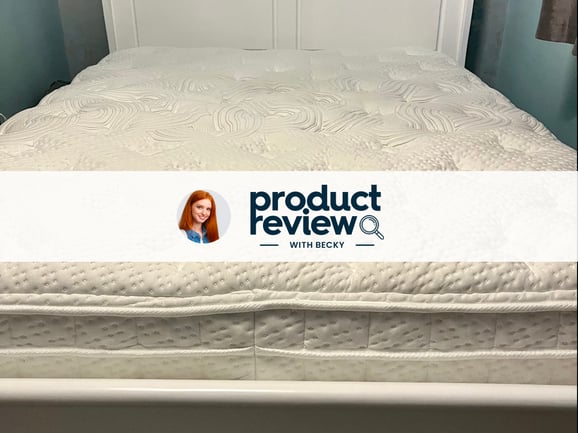
Depth is another key part of the story. This mattress is substantial and visually imposing on a bed base. Some customers love that “hotel mattress” look. But there’s a practical point here: excessive depth can be a nuisance. Deep fitted sheets become non-negotiable, some bed frames can look slightly overwhelmed, and getting a neat, tailored finish with a standard mattress protector can be trickier. I’m not against a deep mattress, but I am against depth for depth’s sake. If the extra height is mostly a by-product of stacking components to hit a premium positioning, I question the value.
The 5cm zoned ActiGel® layer is the more interesting piece for me. Zoned foams can be genuinely helpful when they’re done with restraint: slightly softer where shoulders need to settle, slightly firmer where hips and lumbar need holding up. In store, I could feel that the surface didn’t collapse under the pelvis the way softer memory-foam hybrids can. It held shape and pushed back. That’s exactly what many back sleepers want. The “without overheating” claim also makes sense in principle: gel-infused or more open-cell style foams typically trap less heat than classic slow-response memory foam. But we should keep perspective. Any foam layer can hold warmth depending on the room, bedding, and the sleeper. The cover helps, but it won’t rewrite physics.
Edge support was in particular strong in my in-store testing. Sitting on the side, the edge held up well and didn’t fold away like some softer hybrids. Lying near the edge also felt secure, which matters if you share a bed or simply like to use the full surface. The Tundra 5000’s structure looks and feels designed to maximise usable space, and I do think that’s a genuine strength rather than a marketing flourish.
Motion control was also impressive for a spring-based mattress. It isn’t dead-silent like some dense foam builds, but for a complex spring system it did a very good job of isolating movement. When I shifted position and simulated partner movement by pushing down and releasing around the “hip zone” area, the disturbance didn’t travel dramatically across the surface. That lines up with what customers often report on high-quality pocket spring systems and what has been said in the feedback provided for this model.
Mattress comfort
This is a firm mattress, and it feels it immediately. Not “firm for a foam mattress”, not “firm but cosy”. Proper firm. When you first lie down, there’s a moment of comfort from the top materials, and then you quickly meet the supportive core. The key sensation I noted is stability. Your body stays “on” the mattress rather than being cradled deep within it. For the right sleeper, that translates to reassurance and alignment. For the wrong sleeper, it can translate to pressure points and restless repositioning.
On my back, the mattress made a strong case for itself. The lumbar area felt held, the hips didn’t sink, and the surface stayed even. This is where a firm comfort grade shines. If you’re the type of back sleeper who wakes up feeling “folded” on softer mattresses, or you’ve tried medium hybrids that feel lovely for ten minutes then sag under your midsection, you’ll likely appreciate the Tundra 5000’s refusal to give way.
On my front, it also made sense. Stomach sleepers often need a firmer mattress to prevent the pelvis dropping and causing lower-back compression. In store, the pelvis stayed elevated and the overall posture felt flatter, which is exactly what you want if you’re trying to avoid that “banana” shape. The firmness here is doing a job.
On my side, the story changed quite sharply. The shoulder didn’t sink as naturally as it needs to for many side sleepers, and the hip area felt more “held up” than “welcomed in”. That’s the trade-off with firm mattresses: they can keep you aligned, but they can also stop the body from settling where it needs to. If you have an hourglass figure, broader shoulders, or you’re a dedicated side sleeper, I would be cautious. Side sleeping comfort often relies on a bit more give in the top layers so the shoulder and hip can sink just enough to keep the spine level. With this mattress, the comfort layers didn’t create enough allowance in the time I spent on it.
Now, could a side sleeper tolerate it? Yes, some can - particularly lighter-weight sleepers who don’t drive deeply into the mattress anyway, or people who only spend part of the night on their side. But if you buy this expecting it to “soften up into perfection”, I think that’s wishful thinking. Firm hybrids can relax slightly over time, but the underlying character doesn’t usually transform.
The cooling cover is a real selling point if you’re a warm sleeper, but I want to keep it honest. In-store, the cover felt cooler and fresher than a standard knit. It gave that immediate impression of breathability. However, cooling claims are always conditional. Your duvet, your protector, your sheets, your room temperature, and your body heat output all matter. The best way to view ActiCool®+ is as a helpful contributor, not a guarantee that you’ll never overheat again.
The ActiGel® layer is described as “proven to be more effective at controlling heat than standard memory foam”. That’s plausible, and in my experience gel-infused, faster-response foams often do feel less swampy than traditional slow memory foam. But if you’re extremely heat-sensitive, I still think you should be considering your whole sleep system. A cooling cover on a mattress can only do so much if you’re pairing it with a high-tog duvet and a non-breathable protector.
Suitability
This is the part where I’m going to be very direct, because it’s easy to waste a lot of money by buying a premium mattress that is simply the wrong comfort profile.
In my opinion, the TheraPur ActiGel® Tundra 5000 is best suited to:
Dedicated back sleepers who want a firm, consistent feel and strong lumbar/hip support.
Some stomach sleepers who need the pelvis held up to avoid lower-back strain.
People who value edge support and want to use the full width of the mattress (particularly couples).
Those who dislike the “stuck-in-foam” sensation and prefer a stable, lifted sleep surface.
Hot sleepers who want a cooler-to-the-touch cover and a less heat-prone comfort layer than traditional memory foam.
And I would be cautious about recommending it for:
Side sleepers, especially those with prominent shoulders/hips or hourglass figures, who typically need more pressure relief and sinkage through the comfort layer.
Anyone who wants a plush, enveloping feel or a mattress that “hugs” the body.
People with shoulder sensitivity who often feel numbness or tingling when side sleeping on firmer beds.
Shoppers who are primarily spec-driven and assume “more layers” equals “more comfort”.
Here’s the uncomfortable point: the firmness is not universally “better”, it’s just more specific. If you’re a back sleeper who truly sleeps on your back most nights, firm can be brilliant. If you’re a side sleeper trying to convince yourself you can become a back sleeper, you might end up paying a premium to sleep less comfortably.
Now to the elephant in the room: the price and the brand positioning. I found the Tundra 5000 expensive for what it is, and I struggled to justify who it’s really for in today’s market. If you’re spending serious money in the UK, many shoppers instinctively look towards heritage-style premium manufacturers such as Hypnos, Harrison Spinks, or even Vispring, depending on budget. Those brands often win people over with natural fillings, craftsmanship, and a sense of long-term value.
TheraPur sits in a middle ground where it wants to feel premium, but it’s not quite playing the same game as the classic luxury makers. And that’s where the Tundra 5000 feels slightly awkward to me. It’s dressed up with impressive component counts and cooling tech, but at this level I want the value story to be crystal clear. Who is it for? The shopper who wants a very firm, modern, engineered mattress with a cooler cover and doesn’t particularly care about traditional natural fillings. That’s a real person, but it’s a narrower audience than the marketing suggests.
I also remain sceptical about the necessity of stacking micro-spring layers as a headline feature. Will it change the comfort? Marginally, perhaps. Will it change it in proportion to what you’re paying for? I’m not convinced. It can add a touch of responsiveness and surface buoyancy, but it can also read as “spec inflation”: adding components that sound premium and increase depth, without delivering a night-and-day difference for most sleepers.
What customers thought
The customer feedback you shared is actually quite consistent with what I experienced in store, and it’s useful because it highlights the real strengths rather than vague “best sleep ever” claims.
First, the cooling cover: customers describe it as delivering an “instantly fresher feel” and helping sleepers drift off without overheating. That matches the tactile impression I got when I first lay down. Cooling covers tend to win that first-contact moment, and if you regularly feel too warm at bedtime, that initial relief can be meaningful. I would add, though, that long-term temperature comfort depends on the entire set-up. A cooling cover can be undermined by a thick synthetic protector or a very warm duvet. So I see this as a strong feature, but not a standalone cure.
Second, the ActiGel® layer: customers mention “effective pressure relief for the back and hips while maintaining a stable, non-sinking feel.” That sentence captures the Tundra 5000’s personality perfectly. The mattress offers relief in the sense that it doesn’t jab you with hard springs, and it does cushion a bit, but it refuses to let you drop. This is why it will appeal to back sleepers who want to feel supported, not swallowed. It also hints at why side sleepers may be divided: “non-sinking” is a compliment to one person and a warning sign to another.
Third, partner disturbance: the feedback notes that pocket and micro springs work together to control movement and reduce disturbances. Again, that matches my quick in-store motion test. A good pocket spring unit isolates movement well, and micro springs can add a responsive buffer that doesn’t rebound too aggressively. If you share a bed with someone who fidgets, this is one of the more credible reasons to consider a build like this.
Fourth, edge support: customers call out reinforced edge support and a maximised usable area. I agree. Sitting on the edge felt secure, and lying closer to the side didn’t trigger that subtle anxiety some mattresses create, where you feel like you’re sliding off. For couples, that can genuinely improve sleep because you don’t end up gravitating toward the centre all night.
Finally, the customer conclusion that it’s well-suited to back sleepers needing “strong, consistent support from night to morning” is exactly where I’d land too. If you are that person, the Tundra 5000’s firmness becomes a feature, not a flaw.
What customer reviews can’t always capture, though, is opportunity cost. When someone says “it’s supportive and cool”, that may be true. The question is whether it’s supportive and cool enough to justify its premium price compared with other firm hybrids, or compared with premium traditional mattresses that might offer a more timeless value proposition. That’s where I think shoppers need to be more critical.
The verdict
The TheraPur ActiGel® Tundra 5000 Combination Mattress is a firm, engineered, cooling-leaning hybrid that does several things very well: it feels stable, it supports the back and hips with real authority, it offers strong edges, and it controls movement better than you might expect from such a spring-forward design. In store, it presented as confidently built and clearly aimed at sleepers who want to feel “held up” rather than “hugged”.
But I’m not going to pretend I’m universally enthusiastic about it, because I’m not. My biggest issue is value. I found it too expensive for the proposition, and I struggled with who it is really for. If you have this sort of budget, there are shoppers who will be happier putting their money into a heritage premium mattress where the price buys you craftsmanship, natural materials, and a more classic comfort profile. Alternatively, if you want modern cooling and a firmer hybrid feel, there are often more straightforward options that don’t lean so hard on stacking micro springs and inflating the spec sheet.
To be crystal clear, I don’t think it’s a bad mattress. I think it’s a niche mattress being marketed like it’s for everyone. It isn’t. If you are a committed back sleeper, you run warm, you like a firm feel, you appreciate a cooler-to-the-touch cover, and you want excellent edge support with strong partner-movement control, you’ll probably try this in store and immediately “get it”. It will feel composed and supportive in a way that many medium hybrids simply don’t.
If you are a side sleeper, curvier through the hip, or you need generous pressure relief at the shoulder, I would honestly look elsewhere rather than trying to make this work. Life is too short to spend premium money on a mattress that makes you rotate like a rotisserie all night hunting for a comfortable angle.
My personal recommendation is this: only consider the Tundra 5000 if you test it in-store (as I did) and you love that firm, stable feel immediately. Don’t buy it purely because the spec sounds impressive. Two micro-spring layers and a towering profile might read like luxury, but luxury is sleeping well without having to talk yourself into it. If you have the cash and want the best use of it, I’d be selective, and I’d compare very carefully before committing.
Why you can trust WantMattress
We spend hours testing (and/or researching) every product or service we review, so you can be sure you’re buying the best. Find out more about
how we test .
Published: 29 March 2026 · Updated: 24 April 2026
Tested by
Becky Reeve , Editorial Director, Mattress Expert