What our reviewers found
Introduction
I tested the TheraPur ActiGel® Glacier 4000 Combination Mattress in-store, spending proper time on it in a few positions (side, back and a quick stomach check), paying attention to the things that matter in real life: initial temperature feel, how quickly it warms up, how the foam responds under the hip and shoulder, and whether the spring unit feels lively or muted. I’ll be clear upfront: this is not a home-trial review, so I can’t tell you how it behaves after eight hours, how it performs across changing seasons, or how the cover copes after months of use. What I can do is give you a grounded, experience-led assessment of its construction, its “on-contact” comfort, and whether the marketing claims stack up against what I actually felt on the shop floor.
The Glacier 4000 is positioned as a cool-sleeping, medium-tension, gel-foam-and-springs hybrid aimed at people who overheat and couples who don’t want to feel every wriggle at 3am. On those fundamentals, it’s a strong performer. But it also leans heavily on the “4000” story, and I’m not going to pretend that number should automatically convince you it’s meaningfully better than the lower spring-count options in the same family. In my view, a lot of the uplift you’re paying for here is marketing polish rather than a night-and-day jump in feel.
Design and features
The Glacier 4000’s headline feature is temperature management, and TheraPur has clearly built the product narrative around that. The cover is the star of the show: a graphite-infused ActiCool®+ cover designed to pull heat away quickly and help moisture disperse rather than sit against the body. In-store, the first contact does feel noticeably cool. That “cool touch” sensation is real, and it’s one of the better executions I’ve felt at this price level because it doesn’t feel plasticky or overly slick. Some cooling covers feel like a raincoat; this didn’t.
Under that, you’ve got 4cm of zoned ActiGel® foam, which is basically TheraPur’s answer to the classic memory foam complaint: “I love the pressure relief but I hate the heat and the stuck feeling.” The gel element and the zoning aim to keep the surface more temperature-neutral while giving targeted give around pressure points. From my in-store testing, I’d say it sits closer to a modern “responsive memory” feel than a traditional slow-melting memory foam. It cushions, but it doesn’t swallow you. If you’re someone who has tried old-school memory foam and felt trapped, this will likely feel like a more breathable, less clingy alternative.
Then you get into the spring system: responsive pocket springs paired with micro springs. This is where the “4000” story comes in, because micro springs inflate the count quickly. Micro springs can add a refined, slightly more adaptive surface response, but I want to be very direct here: higher numbers are not automatically better, and micro-spring counts are the easiest way to make a mattress sound more advanced than it necessarily feels. In practical terms, the core question is whether the mattress supports your spine and distributes pressure without creating heat build-up or excessive movement. Spring arithmetic is not the same thing as comfort.
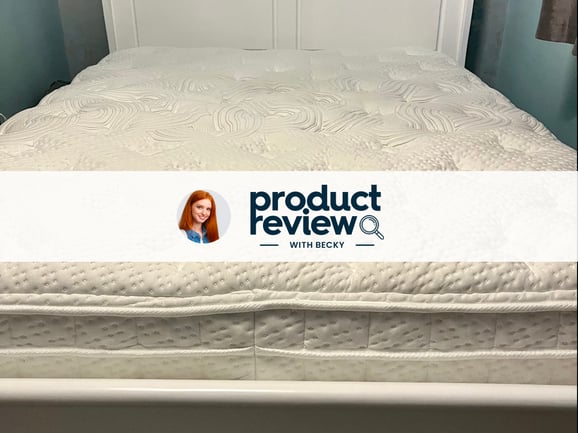
Another design detail that matters more than people think is edge stability. The customer feedback mentions a foam border that improves stability and gives a more “spacious” useable surface. That matches what I felt when I sat on the edge and then lay closer to the perimeter. It’s not a rigid hotel-style edge, but it’s confident enough that you don’t get that rolling sensation that makes a mattress feel smaller than it is. For couples, that’s a genuinely useful feature, because a mattress that collapses at the edges often leads to both people drifting toward the centre over time.
Key design takeaways from my store test:
The cooling cover provides a true cool-to-the-touch feel initially, without feeling artificial.
The ActiGel® layer gives pressure relief in a more buoyant, less sticky way than traditional memory foam.
The pocket + micro spring combination helps with motion absorption and surface responsiveness, but the “4000” headline is not the comfort silver bullet it’s made out to be.
Edge support feels above average thanks to the border structure, which helps the whole mattress feel more useable.
Mattress comfort
This is a medium comfort grade mattress, and in-store it presented as a “true medium” rather than one of those mattresses that brands call medium but actually feels quite firm. The surface has a gentle cushion and then you meet supportive resistance underneath. The best way I can describe the comfort is: you get a comfortable, modern plushness on top, but you’re still floating on the support system rather than sinking into a foam pit.
On my side, I could feel the ActiGel® working under the shoulder and hip. There was enough give to reduce sharp pressure, but not so much that my waist felt unsupported. That balance is where a lot of hybrids either win or lose. Too soft and you hammock; too firm and you get numbness or tossing to find a better spot. The Glacier 4000 landed on the more forgiving end of medium, which is exactly why I think it’s slightly better for side sleepers than strict back sleepers.
On my back, it felt comfortable and generally supportive, but this is where I’m going to be a bit picky. If you’re an average-weight back sleeper, you’ll likely find it pleasant and easy to relax into. However, if you’re a back sleeper who needs a very “level” feel through the lumbar area, you may want something a shade firmer for that extra contouring and lift. Medium mattresses can be brilliant for mixed sleepers, but a back sleeper who is prone to lower-back sensitivity sometimes does better with a firmer, more assertive support profile. This one is supportive, yes, but it prioritises comfort and pressure relief first.
Motion control is one of the strongest aspects in-store. The combination of foam and individually responsive springs does a good job of absorbing disturbances. When I pressed down firmly near where my torso would be, the movement didn’t aggressively ripple across the surface. Now, I can’t recreate the exact reality of a partner getting in and out of bed in a showroom environment, but the structure suggests it’s built to reduce that trampoline effect you get on older open-coil mattresses. If motion transfer is a top issue for you, the Glacier 4000 is a sensible shortlist candidate.
Temperature is the other big comfort factor here, and I have mixed feelings in a helpful way. The initial cool sensation is absolutely noticeable. The cover and the gel layer feel like they’re working together in that first few minutes. The honest caveat is that in-store you cannot truly confirm all-night heat regulation, because overheating is a cumulative, hours-long experience influenced by duvet tog, room humidity, your sleepwear, and your body temperature cycle. But if you’re someone who immediately feels hot the moment you lie down, or you hate that “warm patch” sensation, this mattress gives you a cooler start and a generally more breathable first impression than many foam-forward competitors.
Comfort summary, bluntly:
Medium feel with a slightly forgiving, pressure-relieving top that will make side sleepers very happy.
Back sleepers will likely be comfortable, but those wanting a firmer, more orthopaedic posture might be better served elsewhere.
Strong motion absorption for a hybrid, which couples will appreciate.
Cooling is convincing on contact; “all-night cold” is always marketing optimism, but the materials do point in the right direction.
Suitability
This is where I’m going to be very clear, because most mattress pages try to be everything to everyone and it helps nobody. The Glacier 4000 is best suited to sleepers who want a medium mattress with pressure relief and a cooler surface feel, particularly if they sleep on their side or switch positions through the night. It’s also a very sensible option for couples because it’s designed specifically to reduce motion transfer.
Based on my in-store testing and how the support felt through the hips and shoulders, I agree with the view that this medium tension works for both back and side sleepers, but does a better job for side sleepers overall. The cushioning gives the shoulder somewhere to go, which is exactly what many side sleepers need to prevent that “crunched” feeling. For average-weight sleepers, the comfort-to-support ratio should feel broadly harmonious in most positions.
Where I’m less enthusiastic is the idea that this is the perfect one-size-fits-all medium for every back sleeper. If you’re a back sleeper who loves a very level, slightly firmer surface, or you’ve been recommended a firmer mattress for spinal alignment, I would not automatically push you into the Glacier 4000 just because it’s marketed as supportive. It is supportive, but it’s supportive in a comfort-led way. There’s a difference. Comfort-led medium hybrids can still allow a little extra sink at the hips for some body types, and that can be the difference between “I slept fine” and “my lower back is grumbling in the morning.”
If you are a stomach sleeper, I’d be cautious. Medium comfort grades often aren’t ideal for front sleeping because the pelvis can sink too far, pulling the lower back into extension. A brief in-store stomach test suggested it’s not wildly unsuitable, but I wouldn’t recommend it as a first-choice mattress for dedicated front sleepers. If you occasionally roll onto your front, fine. If you sleep face-down most nights, I’d look firmer.
Now, let’s talk about the “4000” element and who it’s actually for. In my opinion, the 4000 designation is almost entirely marketing rather than a practical upgrade in feel and comfort for most people. Because micro springs are used, the spring count becomes a headline rather than a guarantee of a fundamentally different sleep experience. Yes, more springs can add refinement up to a point, but only to a point. From my own feel testing across similar builds, once you’re around the ~2000 spring region (depending on how the count is calculated), the returns become increasingly marginal. The support system can only do so much if the comfort layers above it are driving most of what you feel.
So who should buy this specific model rather than the equivalent Polar or Glacier with 2000 springs? Honestly, I’d only say:
You’ve tried both in-store and you personally prefer the slightly different surface response of this build.
You’re very sensitive to micro-movements and want the most “fine-grained” spring feel available in that range.
You are happy to pay for the premium positioning and want the top spec in the line-up, even if the comfort difference is subtle.
For everyone else, I would seriously consider saving your money and choosing the equivalent model with 2000 springs. I don’t say that to be awkward; I say it because mattress buying is full of numbers designed to steer you emotionally. What matters is whether you lie on it and think, immediately, “Yes, this supports me properly and I can relax.” In my view, the Glacier 4000’s feel advantage over the lower spring-count equivalents is negligible for the vast majority of bodies.
What customers thought
The customer feedback provided is consistent with what the Glacier 4000 is designed to do, and importantly, it lines up with what I noticed in-store rather than reading like wishful thinking. Customers repeatedly mention a “noticeably cooler feel from the moment you lie down,” and that is exactly the most believable cooling claim any mattress can make. Cooling that you feel immediately is something a cover and top layer can genuinely deliver. The more dramatic claims about staying cool all night are always harder to verify, but first-contact coolness is a tangible feature, and customers are clearly responding to it.
Customers also highlight that the “cooling cover and thick gel layers work together” to offer temperature regulation and “gentle pressure relief without retaining heat.” That description matches the sensation of ActiGel®: it cushions like a modern memory foam, but it doesn’t give you that dense, warming hug that old-school visco foams are notorious for. In other words, it’s plausible that people who normally find memory foam too warm are enjoying this as a compromise: you get some contouring, without feeling like you’re baking.
Another point raised in the reviews is the combination of pocket and micro springs minimising motion transfer and reducing partner disturbance. Again, this matches what the structure should achieve and what I felt when applying pressure in different zones. Hybrids like this typically do well because the springs give individualised support while the foam dampens the bounce. If you share a bed with a restless partner, this sort of build is one of the safer bets compared with traditional spring mattresses that tend to “broadcast” movement.
The feedback about the foam border improving stability and creating a spacious feel is also meaningful. Many people don’t realise how much a weak edge can affect their sleep until they experience it: you avoid the sides, you feel like you’re going to roll off, you end up closer together than you want, and the bed feels smaller. A reinforced perimeter helps the mattress feel more generous and can be particularly valuable if you sit on the edge to get dressed, or if you’re someone who naturally sleeps nearer the perimeter.
One thing I always look for in customer reviews is whether they accidentally confirm the mattress’s true character. Here, the consistent themes are: cool-to-touch, pressure-relieving but not heat-trapping, low motion transfer, stable edges, and medium comfort that suits many positions. That’s coherent. It doesn’t read like random, conflicting experiences, and that usually indicates the product is performing as designed for a wide range of people.
That said, I want to inject a bit of healthy scepticism because it’s important. Customer reviews can sometimes be written in the honeymoon period, when anything new feels brilliant compared with an old, tired mattress. A mattress that feels cooler on day one can still warm up over time if the room is warm or the bedding is heavy. And a medium mattress that feels supportive in the first few weeks can feel different once foams relax slightly. Those aren’t accusations, just realities of mattress ownership. It’s why I always recommend judging cooling claims alongside your duvet choice and considering a breathable protector rather than a heavy, heat-trapping one.
The verdict
The TheraPur ActiGel® Glacier 4000 Combination Mattress is a genuinely good medium hybrid with a convincing cool-to-the-touch surface, a pressure-relieving gel-foam layer that doesn’t feel swampy, and a spring system that helps minimise partner disturbance. From my in-store testing, it delivers a comfortable, modern feel that will suit a lot of people, particularly side sleepers and combination sleepers who want cushioning without that slow, sticky memory foam sink.
But here’s my firm opinion: the “4000” aspect is doing far more heavy lifting in the marketing than it is in the feel. Because micro springs are involved, the spring count becomes an impressive-looking number that encourages the assumption that higher equals dramatically better. In reality, the difference in comfort between this and the equivalent Polar or Glacier model with around 2000 springs is, in my personal view, negligible for most sleepers. If you’re choosing between them and you haven’t tried both, I’d rather you kept your money and focused on getting the right firmness and temperature performance than paying extra for a number on a label.
Who I think should buy it:
Side sleepers who want a medium feel with noticeable pressure relief at the shoulder and hip.
Hot sleepers who want a cooler initial feel and more breathable materials than standard memory foam.
Couples prioritising low motion transfer and a steadier, less bouncy surface.
Anyone who values stronger edge support and wants the mattress to feel useable right across the surface.
Who I think should think twice:
Dedicated back sleepers who know they prefer a firmer, more “held up” lumbar feel.
Front sleepers who need a firmer, flatter surface to keep hips level.
Value-focused shoppers who are being tempted mainly by the “4000” spring count rather than a clear comfort difference felt in-store.
If you try it in-store and you love the feel, there’s plenty to like: it’s cool, composed, and reassuringly supportive for a medium. If you’re buying purely on spec and the “4000” is what’s swaying you, I’d be sceptical. In this range, feel and suitability matter more than headline counts, and I’d happily point many sleepers toward the 2000-spring equivalent as the smarter buy unless they can genuinely feel a difference that’s worth paying for.
Why you can trust WantMattress
We spend hours testing (and/or researching) every product or service we review, so you can be sure you’re buying the best. Find out more about
how we test .
Published: 29 March 2026 · Updated: 24 April 2026
Tested by
Becky Reeve , Editorial Director, Mattress Expert