What our sleep experts found
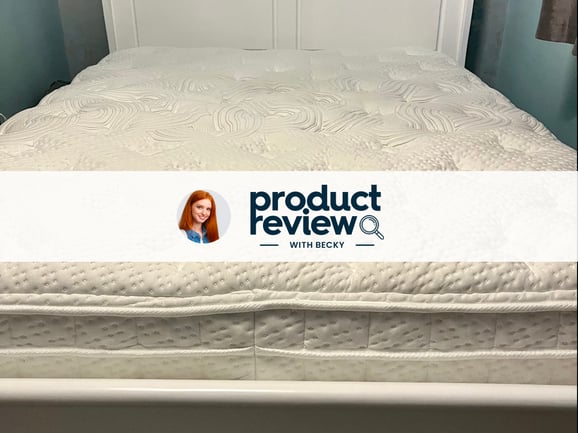
The Deluxe Ellesmere Firm Mattress is a very traditional, no-nonsense model that leans hard into old-school mattress engineering. I should be clear about the context of this review. I have not tested the Ellesmere in person and I have not slept on it at home either. Archers is based in Scotland and I did not have the opportunity to visit a showroom, so everything here is based on the published specifications, my decade in the UK mattress trade, and how these materials typically behave over time.
Design and features
This mattress is built around a 12.5 gauge open coil spring unit supplied by AGRO, which is a serious name in mattress components across Europe. In plain terms, 12.5 gauge is on the firmer end of the spectrum, and open coil is the more classic continuous spring style you see in a lot of value and mid-range beds. If you like that familiar, slightly buoyant feel rather than the more tailored response of pocket springs, you will understand the appeal straight away.
The cover is described as a deep quilted woven damask. That usually means it should feel properly “mattress-like” rather than slippery or cheap, and quilting can take the edge off a firm spring unit. There are also hypo-allergenic fillings mentioned. I like seeing that, but I also stay a bit sceptical because “hypo-allergenic” can be vague unless the brand backs it up with detail on the exact fibres and any treatments used. It is still a positive for people who want to avoid wool or other common irritants.
Edge support comes from a thick perimeter rod-edge wire attached to the outer rows of springs. That is a solid, traditional reinforcement. But I will say this clearly. Rod-edge helps, it does not transform open coil into a premium edge system. You can do better if sitting support is a big priority, especially if you are comparing against sturdier pocket spring borders or foam encasements used on some hybrids.
Mattress comfort
Comfort here is going to be about firm support with a modest amount of surface cushioning. The spring unit will hold you up rather than let you sink in, and the quilting should soften first contact so it does not feel like sleeping directly on a taut spring core. But don’t expect that “hug” people associate with memory foam or the more contoured feel you get from pockets. Open coil pushes back more evenly, which some sleepers love because it feels stable and straightforward.
I’m also quite keen on the fact it is dual-sided. That is becoming rarer, and it matters. Being able to flip as well as rotate typically gives you a longer usable life, especially on a firmer mattress where body impressions can be more obvious if you always lie in the same spot. The flip side is that maintenance is not optional. If you are the type to never rotate a mattress, this design advantage will be wasted.
Suitability
This is absolutely a firm tension mattress, and I would treat it as such. It will suit back sleepers best, and some stomach sleepers too, particularly those who want their hips held up and their spine kept straighter. If you are an average weight back sleeper and you like a flatter, more supportive feel, this is the kind of mattress that can feel reassuring rather than restrictive.
But for side sleepers, I would be blunt. I do not think this is a safe choice. Side sleeping usually needs more pressure relief at the shoulder and hip, and open coil plus firm tension often struggles to provide that sinkage without adding a thick comfort layer on top. And if you have an hourglass figure, the risk is even higher that you will feel pressure build, then you will start shifting around at night, and sleep quality tends to drop.
Heavier sleepers are the other group I would urge to pause. Open coil systems can feel too rigid at first and then too unsupportive later, because they do not distribute load as precisely as a good pocket spring unit. If you are heavier, I would typically steer you toward pockets for better contouring and more consistent support under higher compressions. This is one of those times where saving money can backfire if you wake up feeling like the mattress is pushing you up in the wrong places.
What customers thought
I do not have customer review text to quote or paraphrase here, so I’m not going to guess. What I can do is explain what feedback tends to appear on this style of mattress, and where to be cautious when reading reviews. Firmer open coil mattresses usually attract buyers who want value and simplicity, and they often report that it feels supportive straight away. And people upgrading from a tired old bed can be shocked at how much firmer a new coil unit feels, which can inflate early praise.
The complaints, when they show up, are also predictable. Side sleepers often mention pressure at the shoulder or hip, and couples sometimes note that movement transfer is more noticeable than on pocket spring or foam-heavy beds. Edge support feedback is usually mixed, with some saying it feels fine and others saying the perimeter dips when sitting. That matches my view that it is reasonable but not outstanding.
The verdict
If you are an average weight back sleeper who genuinely wants a firm, traditional mattress at a reasonable price, the Deluxe Ellesmere Firm Mattress looks like a sensible buy. The 12.5 gauge spring unit and rod-edge reinforcement suggest it is built to feel sturdy, and the dual-sided design is a real practical advantage if you are willing to rotate and flip it.
But I would not pretend it is a one-size-fits-all choice. Side sleepers should look elsewhere, and heavier sleepers should strongly consider pocket springs for better load handling and comfort. And if you want premium edge stability or low motion transfer, this is not where I would spend my money. It is a straightforward, firm, classic coil mattress. For the right person it will do the job well. For the wrong person it will feel like a mistake within a week.
Why you can trust WantMattress
We spend hours testing (and/or researching) every product or service we review, so you can be sure you’re buying the best. Find out more about
how we test .
Published: 7 January 2025 · Updated: 24 April 2026
Peer reviewed by
Becky Reeve , Editorial Director, Mattress Expert