What our sleep experts found
I spent time with the Ergosense Mattress in store at Furniture Village, properly getting a feel for it in the way real shoppers do, shoes off, lying in my usual positions, and paying attention to the small things like edge stability and how quickly the surface responds when you shift. I have a decade in the UK mattress trade and I’m picky. This review is built around that in person testing, plus the brand and build information available, and the customer feedback that’s already coming through. What it is not, is a months long at home trial. So I won’t pretend I know how it feels on night 90, but I can be very clear about what you’re getting on day one and what that suggests longer term.
Design and features
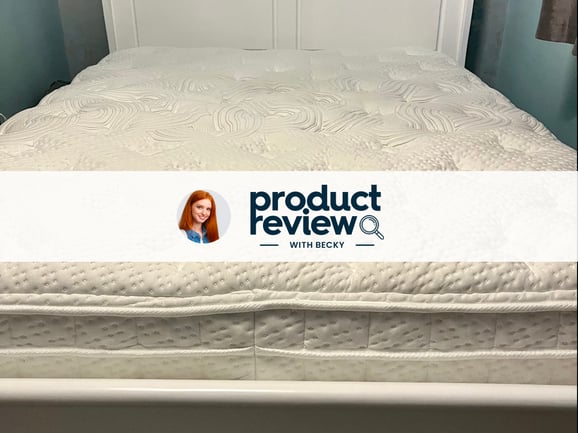
The Ergosense is a UK made mattress produced by Highgrove , and that matters. Highgrove sits in that mid to upper tier bracket where you generally see better quality control and more sensible component choices than the bargain end of the market. The overall look is traditional and slightly plush, with a tufted finish and a breathable stretch fabric cover. It presents like a proper mattress rather than a gimmicky bed in a box concept, and I’ll admit I like that. There’s a confidence to a well built pocket sprung mattress that you can actually inspect on a showroom floor.
Inside, the headline is the Ergosense foam layer paired with an AdvantEdge pocket spring system with 1000 springs in king size. The foam is described as ultra sensitive and pressure relieving, and in store it did react quickly when I changed position. But I’m going to be blunt. It’s intriguing, it’s pleasant, it’s effective, but it’s not revolutionary. I’ve felt plenty of modern comfort foams that do a similar job. Where it does score points is how smoothly it works with the springs underneath, you get that initial cushioning without feeling like you’re sinking into a slow moving memory foam pit.
The other feature I noticed immediately was the DynamicEdge side support . Edge support can be a throwaway claim on many mattresses, and in reality you still end up perching on a soft slope. Here, it genuinely stood out. Sitting on the edge felt stable, and lying close to the edge didn’t produce that uneasy roll off sensation. And that means something because it effectively gives you more usable sleep surface, which couples and anyone sharing with a child or pet will appreciate.
At 25 cm deep , it’s not overly bulky. I see that as a practical plus. Your standard fitted sheets should behave, and the mattress won’t dominate a bed frame visually. It does require turning, which some people will groan at, but I actually like when a mattress encourages basic care. It often hints at a more traditional, longer life approach rather than a one sided, replace it in a few years mentality.
Mattress comfort
In store, the feel landed firmly in the medium camp. The surface has a gentle give from the foam, then you meet the pocket springs for support. It’s a comfortable, easy to like sensation. The kind of mattress that doesn’t challenge you, it just lets your body settle. Pressure relief around the shoulder was good when I lay on my side, and that is usually where medium mattresses either shine or fail. Here it did a solid job, especially for average weight sleepers.
On my back, I felt supported through the hips, but I’ll be honest, if you are a dedicated back sleeper who likes a very held up lumbar feel, you may prefer something a touch firmer. Medium can be a safe choice, but safe is not always perfect. This one is more about balanced comfort than a clinical, ultra supportive firmness. And that’s fine as long as you know what you’re buying.
One mild criticism is value relative to the spring count. Pocket springs are still the best mainstream support system in my opinion, and I’m glad they’re used here. But at this sort of price positioning, I would have loved to see a higher spring count for that extra refinement in contouring and stability. It’s not that 1000 in king is bad, it’s just not the absolute best they could’ve done. And if a brand is leaning on tech language around foam sensitivity, I want the core support spec to feel equally ambitious.
Suitability
This is a mattress I’d confidently point side sleepers towards first. The medium tension and the responsive foam layer take the edge off pressure points, and the springs stop you from feeling swallowed. It should also work well for combination sleepers who roll between side and back, since it doesn’t have that slow memory foam lag that can make turning feel like work.
For back sleepers , I think average weight people will be fine, comfortable even. But if you already know you need firmer support to keep your pelvis perfectly level, I’d treat this as a maybe rather than a guaranteed win. For front sleepers , I’m sceptical, not because it’s a bad mattress, but because medium comfort layers can let the hips dip over time, and front sleeping usually demands a firmer, flatter surface. Also, the hypoallergenic angle is a nice extra, but I always advise using a good protector regardless. Marketing claims are helpful, but a protector is real world protection.
It’s also worth mentioning bed bases. If you’re using a slatted frame, the slat gaps need to be no wider than 7.5 cm to avoid excess dipping and potential warranty issues. That’s not unique to this mattress, but people ignore it and then blame the bed. And this one deserves a fair setup.
What customers thought
The customer feedback I’ve read is strongly positive, and it lines up with what I felt in store. One person called it the best mattress they’ve ever had, and said they had no aches and pains after sleeping on it. That’s a big statement, but it does make sense for someone moving from an older, unsupportive mattress into a fresh pocket sprung build with a comfortable top layer. Another review mentioned switching from a soft mattress to something firmer and feeling their back improve the next day. I can see why, even though this is rated medium, it has a more stable, supported feel than many soft, saggy mattresses people suffer through for years.
There was also a comment about it being a perfect fit and great for occasional use. I read that as a sign it’s an easy going mattress, not too fussy, not too extreme. But I wouldn’t pigeonhole it as only a guest room option. With the edge support and the overall build quality, it’s clearly intended as a main bedroom mattress, especially if you want something that feels traditional but not old fashioned.
The verdict
The Ergosense Mattress is a genuinely good, well judged pocket sprung mattress with a responsive foam comfort layer and excellent edge support. From my in store testing, it’s comfortable quickly, supportive enough for most people, and it makes smart practical sense with its manageable depth and usable sleep surface. I like that it’s made by Highgrove in the UK, and overall it feels like a product built by people who understand mattresses, not just branding.
My main gripe is that it doesn’t quite push the spec as hard as it could for the money, particularly on spring count. And I’m not convinced the Ergosense foam should be treated as some sort of breakthrough. It’s good, but it’s still foam doing foam things. Still, if you want a medium feel that suits side sleeping especially, and you care about edge stability, you could do much worse than this. In fact, at the wrong end of the market you almost certainly will.
Why you can trust WantMattress
We spend hours testing (and/or researching) every product or service we review, so you can be sure you’re buying the best. Find out more about
how we test .
Published: 11 February 2024 · Updated: 8 August 2024
Written by
Becky Reeve , Editorial Director, Mattress Expert
Peer reviewed by
Ray Summer , Health Content Writer & Editor